Blog
Grounding For Grief: How Being In Nature Can Help
Discover how important nature is for the grieving and healing process, and how a green burial park can provide the ideal surroundings to move forward from loss.


Discover how important nature is for the grieving and healing process, and how a green burial park can provide the ideal surroundings to move forward from loss.
Losing a loved one is often extremely overwhelming, shocking and difficult to manage, and how it affects different people can vary in very distinctive ways.
Whilst a Funeral Ceremony can help to celebrate a loved one’s life and ensure they will always be remembered, it also helps those who cared for them to find a sense of closure and begin to process their grief.
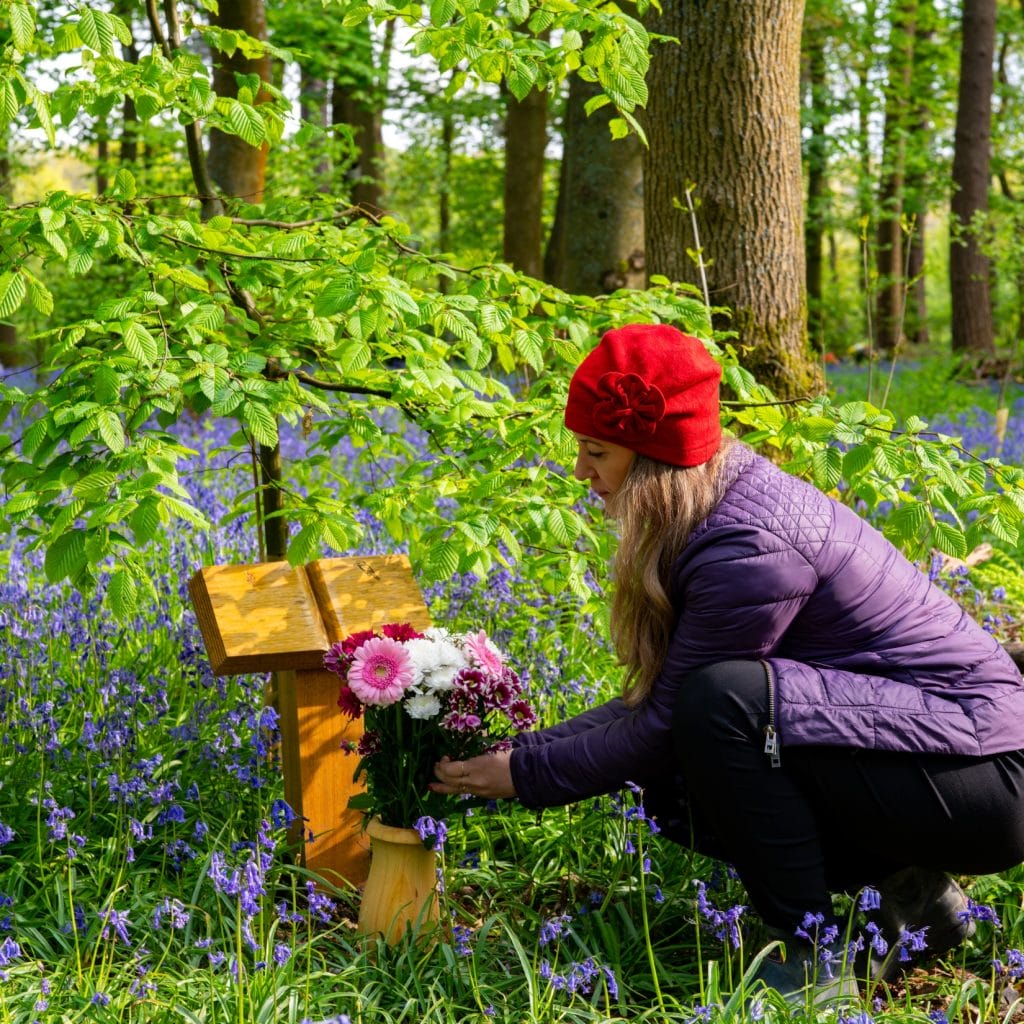
Part of how this can benefit comes from your loved one’s final resting place and being in a green burial park, amidst the first bloom of spring, can help a sense of hope begin to emerge through the grief.
Nature is healing in a lot of ways for people who are currently grieving or need to take time to process their emotions.
To understand why, it is important to explore how grounding works more broadly, and how these principles can be combined with the healing power of nature to help us work through loss.
The concept of grounding is an active effort to recentre yourself in the moment following trauma or tragedy. When you experience loss, it can be so overwhelming that it becomes difficult to stay present, as intrusive thoughts and emotions take over.
It is a similar concept to mindfulness, and both work extremely well in nature due to the incredible sensory effect the natural world has on us.
Most people are aware of the countdown or 5-4-3-2-1 technique to ground themselves in the moment during a moment of emotional crisis, but it can help you reconnect to your senses, particularly if you feel like you are disassociating.
To ground yourself using the countdown technique, focus on:
There are a lot of reasons why nature has the power to help us process our loss, but one of the most significant is the sense of intention it encourages when we spend time in it.
Modern life can feel fast-paced and overwhelming, leaving little space to process how we feel but stepping into nature has the side-effect of grounding us and slowing down the pace. We move in harmony with the flutter of wings and the flow of a tranquil stream.
It allows us to reflect, to comfortably contemplate in solitude without feeling lonely and alone, whilst also providing a reminder of the natural cycles of life, particularly during a time of renewal as potent as spring.
Whilst loss can feel like an end, nature can provide us with the perspective of a new beginning, one that we can reach at our own pace and by following the natural pathways which connect us to nature.