
Deciding what to do with your loved one’s ashes after cremation is a deeply personal choice. With cremations becoming increasingly popular in the UK, there are so many unique and wonderful ways in which you can honour your loved one.
Nowadays, one in every 25 funerals arranged by Co-op are direct cremations. Yet, according to the Co-op’s Changing Face of Funerals report, one in ten (9%) of people who have arranged a cremation say that can’t decide what to do with their loved one’s ashes.
We’ve pulled together some of the most popular ideas, along with some heart-warming stories from members of the GreenAcres team, to inspire you to find the perfect memorial.
Have them crafted into jewellery
Memorial jewellery can help you feel close to your loved one. Enabling you to carry them with you wherever you go. Whether you choose a ring, bracelet, pendant, cufflinks or brooch, the ashes can be imprinted directly onto the jewellery or a resin gem, providing comfort through every stage of your life.
The multi-award winning Ashes Memorial Jewellery uses innovative technology to turn ashes into beautiful keepsake pieces. Similarly, EverWith Memorial Jewellery specialises in creating beautiful, bespoke keepsakes in memory of loved ones who have passed away.
Scatter the ashes somewhere special
Scattering a loved one’s ashes is one of the most common ways to say goodbye. 28% of people have them scattered at a crematorium, while 17% scatter them in a special landmark or beauty spot.
Some of the most popular ideas include scattering the ashes at sea or somewhere that meant a lot to your loved one. You can also have the ashes scattered from a plane where they can roam free forever more.
Many of our families have recently asked about Viking burials. While Viking burials are illegal in the UK, you can have ashes sent off to sea or on a lake in a Viking ship.
One of our recently bereaved widows is planning on buying a casket for her husband’s ashes. It gets taken out to sea on the outgoing tide and gradually dissolves, dispersing without the need to go out in a boat. That way, wherever his children end up in the world, they only have to go to the sea to be near to their dad.
Create a Living Memorial
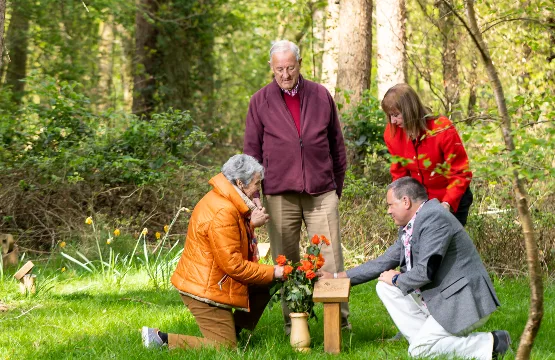
One of our favourite ways of memorialising a loved one is a living memorial. By interring (burying) their ashes in nature, you create a lasting tribute – a place of remembrance that grows and changes with the seasons.
Our Living Memorial options provide a serene space where treasured memories can bloom. They offer the opportunity to create new rituals, reflect, and find comfort in the beauty of nature, ensuring your loved one’s legacy lives on.
At GreenAcres Living Memorial Parks, we have many options for you to choose from, including:
Tree Circle
Set amidst natural beauty, a memorial within a Tree Circle serves as a heartfelt tribute to a life well lived. A Tree Circle offers a shared resting place, we have many beautiful Tree Circles available across our Parks, the picture above shows a Tree Circle in our woodland area in springtime, covered in a carpet of bluebells. Tree Circles can be found in our serene woodlands, open meadows, tranquil lawns and lush orchards. Each plot within a Tree Circle accommodates burials, ashes, or a combination of both.
One of our families chose a Tree Circle in our wildflower meadow, a perfect spot for their loved one:
“We chose a plot within a tree circle in Heatherley Park for our mum’s ashes, nestled in the wildflower meadow. She loved the sunshine – we always called her “the lizard” – and this spot is bathed in sunlight for most of the day.
It’s the perfect place to bring our children, her beloved grandchildren, to share stories about her and remember her wonderful ways. It feels like a peaceful sanctuary in nature, surrounded by wildlife, wildflowers, and beautiful trees – a place as full of life as she was.”
Living Memorial Tree
A living Memorial Tree is a natural memorial that will last for generations, dedicated exclusively to your family. Planted as a sapling (young tree) you will see them grow and flourish forevermore. An optional outdoor ceremony can also be held at the time of planting, adding a personal touch to this tribute. Living Memorial Trees are situated in our serene woodlands, open meadows, tranquil lawns and lush orchards. A Living Memorial Tree can accommodate ashes, burials, or a combination of both.
Living Memorial Bay
Bordered by natural logs or neatly trimmed hedges, a Living Memorial Bay serves as a timeless tribute to love and remembrance. Each bay offers a unique and dedicated space for families to connect with their loved ones. Set amidst our peaceful woodlands and open meadows, each bay is thoughtfully designed to blend with the surroundings. Embraced by gentle greenery, a Living Memorial Bay is ideal for those seeking a private space. Suitable for ashes, burials, or a combination of both.

Find a unique spot that holds sentimental value
When it comes to laying ashes to rest, nothing is off-limits. And every family’s story is unique. So much so, one of our families has chosen to keep in their knicker drawer!
“My mum used to iron all the underwear in the house and wouldn’t allow us to leave without clean, freshly ironed underwear. I felt my knicker drawer was the best place to keep Mum until I can let go of her. It’s somewhat of a tradition.”
You may have a place in the house that meant a lot to your loved one and reflects their life, allowing you to create a more personal tribute.
Get a tattoo with the ashes in the ink
A tattoo using your loved one’s ashes in the ink is a wonderful way to keep them close to you forever. It may provide you both a visual reminder and a physical connection to them. The process is the same as getting a normal tattoo; only a small portion of the ashes are mixed with traditional ink
Only some of the ashes are used for the tattoo. So you still have the option to find the perfect resting place for your loved one with the remaining ashes. Creation Ink has a range of helpful blogs and advice if you’d like to learn more.
Split the ashes
If you’re struggling to know what to do with your loved one’s ashes, you can pick multiple options to honour their life. One of our families has chosen to split her father-in-law’s ashes across a few of his favourite locations.
“My father-in-law was a keen fisherman, so half of his ashes are interred by the pond in GreenAcres, while the rest have been split into three – a paperweight containing a small amount of his ashes which is on my mother-in-law’s bookshelf, a miniature urn, which is in my brother-in-law’s fishing bag, and the rest in a floating water pillow placed in the river where he loved to go fishing!”
Lay them to rest at GreenAcres
Many families take great comfort from laying their loved ones’ ashes to rest at a GreenAcres Living Memorial Park. Whatever you’re looking for, there are several options to choose from to create a lasting and personal tribute to the person you love, a special place in nature you will want to visit time and time again.
Talk to a member of our friendly and knowledgeable team to discuss all the available memorial options for ashes at our GreenAcres Living Memorial Parks.
Father’s Day is a time to celebrate dads and everything they mean to us. But if you’re suffering from the loss of a father or father figure, it can be an incredibly tough experience to go through.

For many people, a father or father figure may represent strength, stability, security and support. Maybe they were a great source of humour, joy or wisdom – a mentor and role model. The flip side of a father’s aura of strength and dependability means it might be hard to get close to him in an emotional sense. But whatever the nature of your relationship, a father figure is likely to have a huge impact on your life, shaping your choices and informing your character.
So, when a father dies, the hole that leaves in our lives can hollow us out and leave us feeling an enormous range of emotions. For some, that can vary from deep sadness to vulnerability, and even a sense of unfinished business, depending on the nature of our relationship and the circumstances of their passing. Father’s Day can bring old feelings back to the surface and amplify those that are already there.
GreenAcres is here to help. We understand how overwhelming Father’s Day can be, so this blog offers some advice on how you can cope.
Remember, your feelings are normal
People lose their loved ones in different phases of their lives and no matter how expected or unexpected the death is – it hurts.
When you’re grieving the loss of a father or father figure, your feelings are likely to change from one moment to the next. You may feel shock one day and anger the next – or you may experience these emotions within hours of each other. However you’re feeling, you must be kind to yourself and remember that this is completely normal.
Supressing these emotions and avoiding your grief is likely to prolong the pain. Embrace your feelings as best you can and try not to be too hard on yourself when you’re feeling particularly emotional around Father’s Day.
Find a fitting memorial
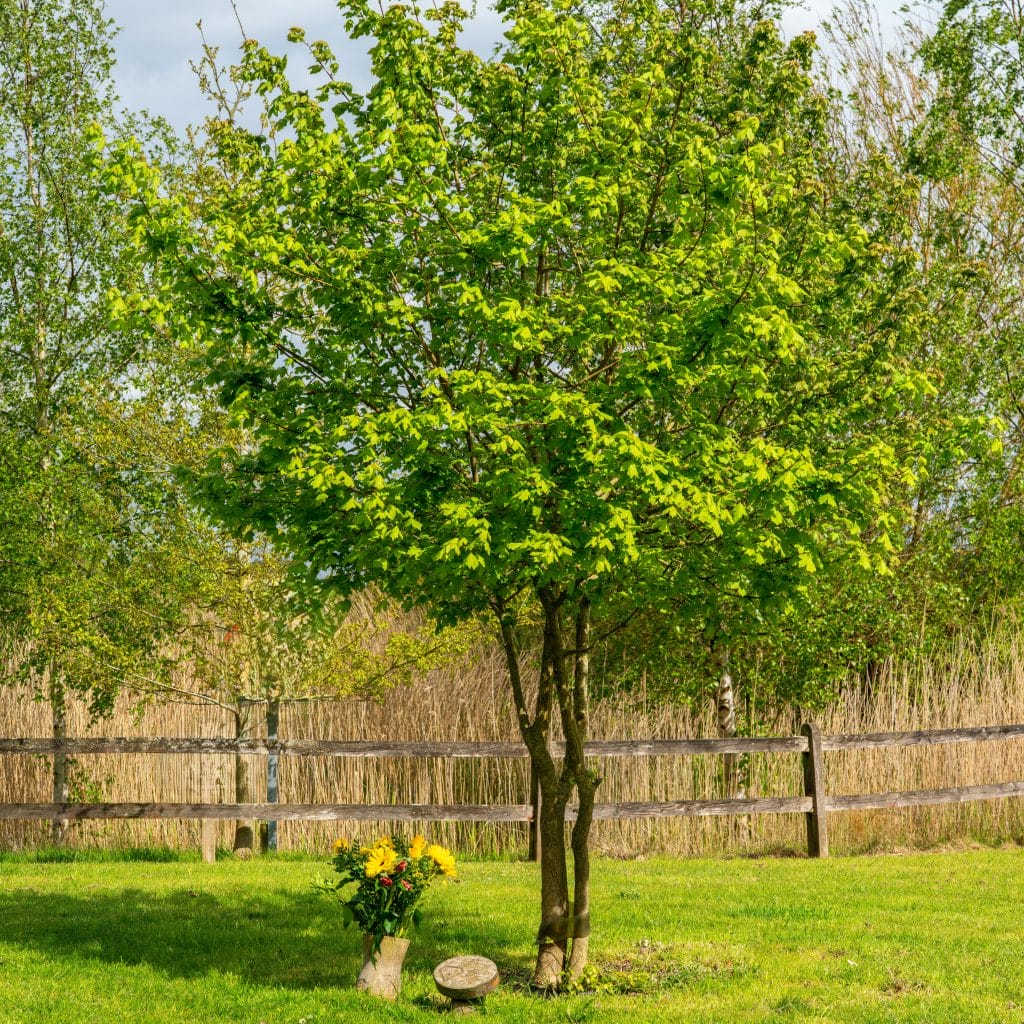
Sometimes finding the right memorial for your loved one can be soothing. Some people find peace in visiting the memorial, whether it’s just sitting nearby and reading a book, spending time keeping your memorial neat and tidy, or simply reflecting on happy memories. Talking can help too – whether you’re sharing what’s on your mind with your loved one or having a chat with someone else who is visiting or working at the Park.
Everyone’s feelings, needs and wishes are unique, and everybody’s bereavement journey is different. Places like GreenAcres recognise this and support you to plan and create the perfect service, burial and lasting memorial for you and your family.
At GreenAcres, we can help you find the perfect memorial to your loved one. Our friendly and knowledgeable team are on hand to support you with creating a fitting tribute that you can visit and reflect on precious memories for years to come.
Revisit memories
Sometimes revisiting memories and talking about the person you’ve lost can help you along your bereavement journey.
You may find comfort from going through old photographs from when your dad was young. There are bound to be many parts of his life you didn’t know about, which can help you to understand more about his experiences and the life he lived. There’ll also be certain objects that evoke special memories of your dad, which you can keep and cherish forever.
It can also help to visit your dad’s grave or memorial on Father’s Day. While this is a personal choice, many people find comfort from visiting their loved one’s resting spot and tending to their grave – even if just for an hour or two.
Do something your dad would have loved
What better way to honour your dad’s memory than by doing something he loved when he was alive? Whether he enjoyed pottering in the garden, fishing by the lake, taking a walk through the woods or cooking a delicious meal, spending the day doing his favourite things is a lovely way to remember him as he was.
Share stories with loved ones
If you feel up to being around other people on Father’s Day, you may take comfort from sharing and hearing about stories involving your dad. Get together with those who knew him over a cup of tea and bring him to life through your collective memories. You may have turned your dad’s social media accounts into an online memorial. If so, you can share tributes on there and invite others to do the same.
Write a letter
If you find it hard to articulate your grief, particularly around Father’s Day, it can be a helpful and cathartic experience to write your feelings down in a letter to your father. You may find this helps bring you closer to your dad. It can also help you make sense of complex emotions, bringing a sense of peace and comfort to guide you through this difficult time.
If you long to be closer to your dad again, you could try reading out your letter to him, imagining he’s there with you. Tell him you’re with him and you love him. It may not work for everyone, but this process helps some people manage the pain of their loved one’s passing.
Seek help from a professional resource
It’s important to remember that you don’t have to deal with your grief alone. If you or someone you know is dealing with the loss of a father figure, here are some resources that might help you:
- Cruse Bereavement Care’s confidential helpline is available every day and the charity has an online chat facility from 9am to 9pm weekdays.
- Heal Grief.org – this organisation is based in the USA but the insights it gives are relevant to us all.
- The NHS website features useful links and information to support you through bereavement.
Sadly, men aren’t encouraged enough to talk about their mental health. As a result, they bottle up their feelings in order to cope. According to a report by Mind Men’s Mental Health, only two in five men admit to feeling worried or low, and are far less likely than women to seek support.
There are several organisations that can help provide support and guidance for those who are struggling following their father’s death. Men’s Sheds is one such movement. Men’s Sheds are community space for men to connect, converse and create together, reducing loneliness and isolation. There are 582 across the UK, so there’s bound to be one near you.
Supporting children through loss
Losing a father or father figure is hard for anyone, irrespective of their age. But if a father dies when his children are still young, this can add an additional layer of complexity to the emotions felt by those he leaves behind.
As well as dealing with the rawness of their grief when they lose their father. Children and young people are likely to go through the grieving process again and in different ways when Father’s Day approaches.
It’s important for everyone involved to find the support they need to explore their emotions and cope with their grief during this difficult time. Thankfully, there are many resources that can help:
- Cruse Bereavement Care’s website for young people who’ve been bereaved, with films, poems, advice and insights from peers and specialists.
- Young Minds’ experts and ambassadors explore the stages of bereavement and how to work through your grief
- Family Lives’ useful links to sources of information and advice
- Child Bereavement UK supports parents and children through the grieving process. These resources are designed to help adults supporting bereaved children and young people
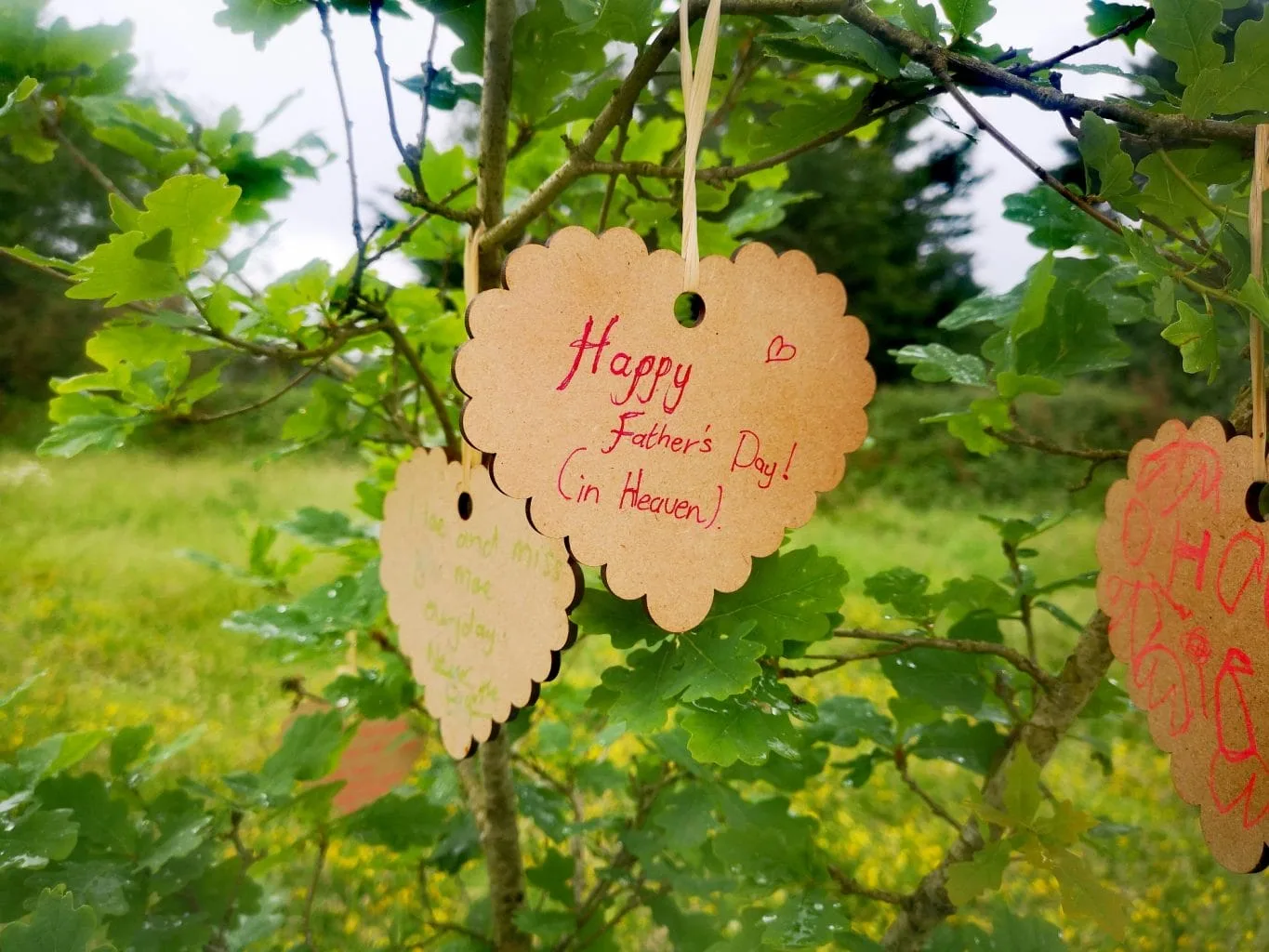
Come and join us at one of our Father’s Day services
Please join us in your nearest GreenAcres Park this Father’s Day, to remember all the important men in our lives. Spend precious time together as a family to celebrate and remember the things you loved about your dad in a peaceful, quiet and reflective setting.
Book onto a Father’s Day service to secure your slot.
For many, Mother’s Day represents a day of celebrations. But if you’ve lost your mum or mother-figure, or you are a mother who has lost a child, it can be a day filled with grief and sadness. Even the simplest things can remind us of the loved ones we’ve lost, which is why it’s important to take care of yourself as Mother’s Day approaches. We’ve collected together some advice to help you cope with this difficult time while you’re grieving for a lost loved one.
Don’t feel pressured
Families often make plans to celebrate Mother’s Day. However, you don’t need to feel pressured to join in with them. Family and friends may invite you along to stop you from feeling left out, but they will understand if you don’t feel up to it. It’s OK to say no and it’s OK not to be OK. Instead, do things that you feel are right for you – like being close to nature and having a walk, watching a film, making your favourite food or listening to music that brings you happy memories or distracting yourself with your favourite hobbies.
Write down how you’re feeling
If you struggle to articulate how you feel, you could write your feelings down in a letter or card. Grief isn’t always an easy thing to make sense of, but giving yourself a chance to think about how you feel can help you cope with your grief – particularly when it’s more heightened around Mother’s Day.
Share your loved ones memory
Sharing memories of your loved one with family and friends is a wonderful way to honour them on Mother’s Day. You could get together over a cup of tea or start an online chat if you don’t feel up to seeing people. If you’ve turned your mum’s social media accounts into an online memorial, you can share tributes on there, too. There are also many online communities that bring comfort by sharing supportive messages on grief and loss, like Grief Speaks Out.
Hold a memorial service
You may take solace from holding a memorial service for your loved one on Mother’s Day. The service doesn’t have to be anything big. Simply lighting a candle or planting a beautiful plant are great ways to remember that special person.
Get support at our monthly GreenAcres Bereavement Cafés
When you lose someone you love meeting others who can relate to how you feel can help. We offer a kind, supportive space with understanding from others who are also living life after loss.
Often it is difficult to walk through the door to somewhere new especially when you are grieving. We promise you a warm welcome from our experienced and compassionate team along with tea, coffee and cake. For more information, click here.
Join us for our Mother’s Day Remembrance event
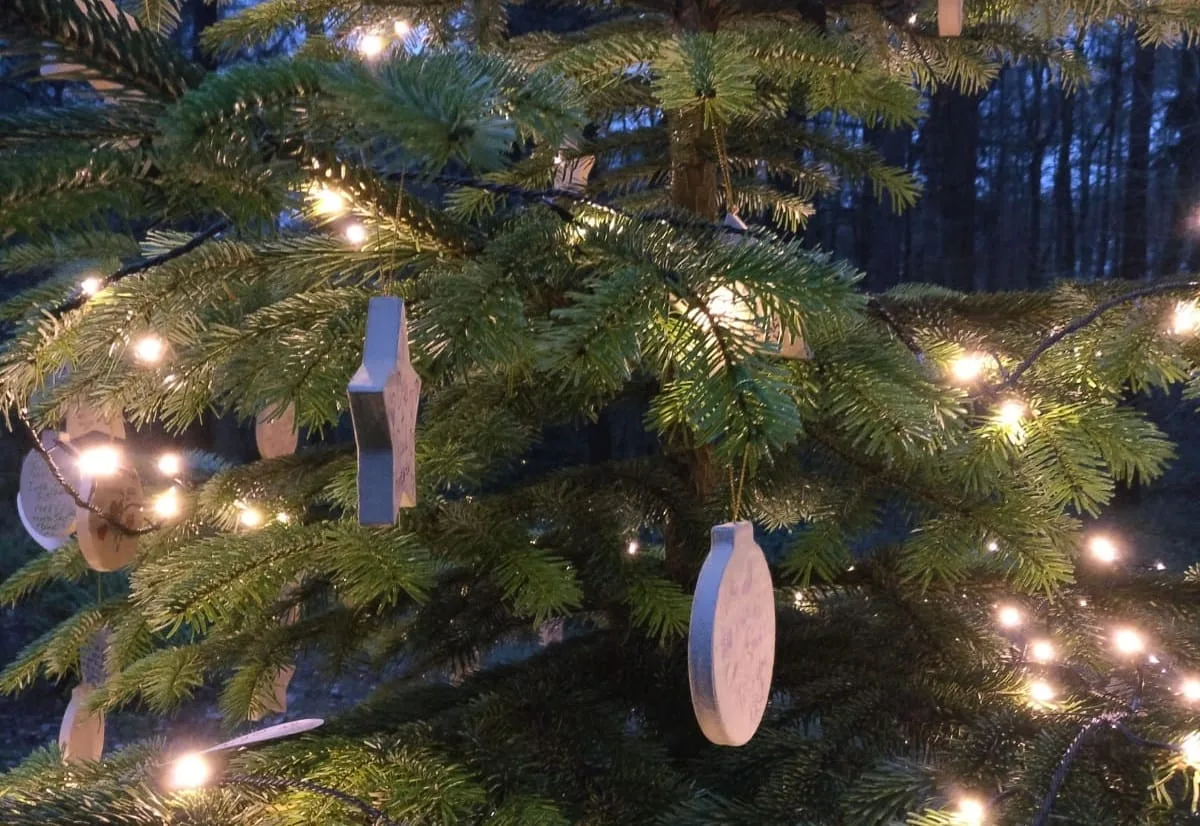
We invite you to our Mother’s Day event on Sunday 30th March at your local GreenAcres Park – a time to honour cherished memories, reflect, and remember those who are no longer with us. You will also have the opportunity to light a candle and tie a memorial heart on our Remembrance Tree
Find out more about our Mother’s Day event here.
Even though we don’t often think about our death and what happens afterwards, more and more people are planning how and where they’d like to be remembered. If you’re thinking about planning your own funeral or want to find out more about the benefits of doing so, we’ve pulled together this handy blog on why pre-planning your funeral is a good thing to do.
1. You’ll be able to save yourself and your family money
Funerals – whether unexpected or not – are often a considerable expense to families. By pre-planning, you can relieve your loved ones from the burden of footing the bill during an already-difficult time. Plus, by thinking about things before the time comes, you can pay off your funeral over a longer period, allowing you to spread the cost into more manageable chunks. You also won’t need to worry about inflation making your funeral more expensive.
Some Funeral Directors offer payment plans that you can benefit from, so it’s well worth having a chat with yours (if you decide to use one) before you put down a deposit. You can find out more about funerals plans here.
2. You can have your funeral exactly as you want it
Your loved ones will no doubt honour you as best as they can, but unless you’ve spoken to them about your wishes beforehand, they might have some ideas of their own. By pre-planning your service, you can have it exactly as you want it. Whether you have a particular theme in mind or want your guests to wear a certain colour, you can set out what you want before the funeral, giving yourself the send-off you deserve.
3. You’ll have time to make important decisions
Pre-planning your funeral means you can slow down and take some time to think about what you actually want. When loved ones are left to plan a funeral, the finer details are often overlooked due to it being a highly emotional time. Some people also struggle to know what to do under pressure.
Instead of hasty decision-making, you’ll have the opportunity to shop around, find companies that meet your values and plan your funeral at a pace that suits you.

4. You’ll save your loved ones from unnecessary stress
Planning a funeral isn’t easy – especially during the early stages of grief. By getting your affairs in order before you die, you can ease your family’s stress by taking away the burden of funeral planning. You may also take some comfort in knowing everything is taken care of before the time comes.
5. You can relieve your loved ones of making complex decisions
If you’re religious, have spiritual beliefs or want a particular kind of service, pre-planning means you can take care of the trickier elements of funeral planning. It’s not uncommon for friends and family members to make mistakes when they’re grieving. Choosing what you want and how you want it removes the risk of oversights, giving you peace of mind that your wishes are taken care of.
To find out more about pre-planning your funeral, such as what to think about, take a look at our step-by-step pre-planning guide. If you’d like to plan ahead, pre-purchased plots can now be acquired with a GreenAcres instalment plan. Simply secure the space you want at today’s prices and pay it back over 10 months with no added interest. For more information, please speak to a member of the team at your local Park.
Where to go for support and guidance
Mother’s Day is a time to celebrate the special bond between a mother and her children. It’s also a day to recognise and honour the motherly figures in our lives. But for those who have lost a child, it’s a day of great sadness and grief – one that will undoubtedly trigger painful memories.
Even though losing a baby or child is one of the most difficult and emotional experiences anyone will ever have to go through, we don’t tend to talk about how this special day affects bereaved mothers. This is why Mother’s Day can make the loss of a child feel even more unbearable than any other day of the year.
We understand how overwhelming the pain of Mother’s Day can be. This blog will guide you through these emotions and offer guidance on where to seek support.
Surround yourself with loved ones
Mother’s Day is bound to be tougher than any other day of the year. But surrounding yourself with friends and family and reflecting on precious memories can help turn your thoughts of grief and sadness into comfort.
Going for a walk together can really help turn your feelings of grief into hope. Connecting with nature is proven to help people with grief – after all, nature’s a healer. Find a beautiful spot to explore and try to turn your attention to all the natural wonders you see. If you need to walk in silence for a while, that’s okay. Your loved ones will understand.

You might also find comfort in telling stories of your child, taking some time to remember the good times you shared. Having permission to show your emotions and speak about your loss is healthy, so don’t feel shy in asking your friends and family if you can talk about how you’re feeling.
Keep busy
If you’re someone who likes to keep themselves busy, make specific plans for Mother’s Day and stick to them. Whether you choose to honour your child or spend the day being as ‘normal’ as possible, planning ahead keeps you in control, allowing you to spend Mother’s Day in the way that’s right for you and your family.
Look after yourself
You might prefer to be by yourself this Mother’s Day – and that’s okay. Just remember to be as kind to yourself as possible. Pour yourself a hot bath, watch your favourite TV programme, or go for a run to clear your head. Do whatever makes you happy – and don’t feel guilty for putting yourself first.
Visit your child’s grave or memorial
You may take comfort from visiting your child’s grave or memorial on Mother’s Day. This is a deeply personal choice, but many grieving mothers find that visiting their loved one’s resting place provides the peace and quiet they need to reflect on precious memories.
Seek support
If you feel like you’re struggling in the run-up to Mother’s Day, there’s no shame in asking for help. There are many organisations in the UK who can help. We have listed a few below:
You might find comfort from the many video stories and articles available online from other families who have lost a child, as well as initiatives from professionals who support them. Remember, you’re not alone in your grief.
Join us at our monthly Bereavement Cafés
Our monthly Bereavement Cafés are welcoming spaces held within our Parks, where the topic of death is not a taboo, but an open and honest conversation. Here, you can say your loved one’s name, share your memories, and talk about your grief with others who truly understand.
For those not ready to share, Bereavement Cafés offer the opportunity to simply listen, to be in the presence of others navigating loss, and to find comfort in knowing you’re not alone.
These gatherings are not about fixing grief or rushing healing – they’re about creating a safe, compassionate community where every experience of loss is respected, and every story matters. Whether you come to talk, listen, or just be, you are warmly welcomed.
Free tea, coffee and cake. See here for your GreenAcres local Park monthly Bereavement Café
Join us for our Mother’s Day event
We invite you to our special Mother’s Day Remembrance event – a time to honour cherished memories, reflect, and remember those who are no longer with us. You will also have the opportunity to light a candle and tie a memorial heart on our Remembrance Tree.
Refreshments will be served and everyone is welcome! Click here for more information.
This blog offers a step-by-step guide to organising a cremation and cremation service.
There are many reasons why people are opting for cremation – the higher cost of burial is probably one of these. However, respect for, and the honouring of, the religious belief of their loved one is another important consideration. Members of some faith groups choose burial because that aligns with their faith (Jews and followers of Islam are examples). Others look to cremation – particularly Hindus and Sikhs, as well as those Buddhists who choose to follow the example of the Buddha (Siddhartha Gautama).
Another factor is that cremation offers families many more options to memorialise their loved one, so what follows can become a deeply personal experience. For some people, the act of scattering ashes, for example, gives them a sense that their loved one is all around them or looking down and continuing to admire the place chosen for them. Or they might choose to place the ashes in a beautiful urn at home.
Not all crematoria and cemeteries allow ash scattering. However, scattering is possible in designated areas at any GreenAcres Park. Generally though, there is nothing in UK law to stop you scattering ashes in a place that was special to your loved one, or over water (including rivers), but you do need the landowner’s permission. And if you’re planning to scatter ashes on ‘controlled waters’ you should consult the Environment Agency’s recommendations. But, before any cremation, there are some legal steps to follow:
The four legal steps
Step 1 is only likely to involve you, a family member or a friend/neighbour if your loved one has died at home. In a hospital or care home, Step 1 will be carried out by staff so you won’t need to get involved.
Step 1 – Verification of death
Verification of death is the process of identifying that a person has died. It has nothing to do with providing a death certificate or identifying the cause of death.
English Law allows any competent adult, either independently or with remote support from a doctor, to verify that someone has died. It doesn’t need to be done by a doctor.
The British Medical Association (BMA) and the Royal College of Physicians (RCP) have produced a collaborative process (protocol) that can be followed by anyone present to verify death if they feel able to do so.
If you find yourself having to verify a death, either call your GP who will support you over the phone, or follow the guidelines in the protocol above.
Step 2 – Certification of death
After a death has been verified, a Medical Certificate of Cause of Death (MCCD) must be completed and submitted to the local registrar of births, marriages and deaths by a (GMC registered and licensed) doctor. You don’t need to be involved in this step, and there’s nothing to pay.
If the doctor cannot offer a likely cause of death, the case must be submitted to the coroner to establish a cause of death.
Now, because of Covid-19 and the Coronavirus Act 2020, for a doctor to complete an MCCD without referral to the coroner, they must have seen (including via video link) the patient in the 28 days before death, or in person after death. If these conditions are met, the MCCD will be completed by the doctor and sent (by email) to the registrar who will record the death and complete the paperwork to allow burial or cremation.
Step 3 – Registration of death
The person registering the death is formally known as ‘the informant’. Only relatives or specific individuals are qualified by law to register a death. Other people include:
- The occupier of the house or an official from the public building where the death occurred
- Someone present at the death
- The person making the arrangements with the Funeral Director
The informant must register the death within five days in England, Wales or Northern Ireland and within eight days in Scotland.
However, if there’s a Coroner’s inquest (Procurator Fiscal in Scotland), registration is delayed until the inquest has been completed.
Depending on which country the deceased person lived in, the informant must register the death:
- In England and Wales at the Register Office
- In Northern Ireland at the District Registration Office
- In Scotland at the Registrar of Births, Deaths and Marriages
- Registering a death is free, but you will need to pay for copies of the death certificate in order to deal with their estate. We suggest you get multiple copies of the certificate. This means you can deal with several organisations at the same time instead of having to wait for your only copy to be returned by one organisation (say the bank) before you can deal with the next one.
Step 4 – Cremation certificate
The Coronavirus Act 2020 changed the requirements of the cremation process. During the COVID-19 emergency, Form Cremation 4 is now the only form that needs to be completed. This form must be completed by a registered doctor and sent to the relevant crematorium. (The standard requirement for sending form Cremation 5 as well has been suspended.) Cremation 4 will then be checked by the crematorium medical referee to ensure it complies with guidance. Referees have the right (and a duty) to raise questions to ensure the safety of the system. When you have completed the formalities, and the death has been registered, you can then think about the cremation and cremation service.
You may also find the Tell Us Once service available through GOV.UK particularly useful. It lets you report a death to most government organisations in one go. In Northern Ireland, you’ll need to visit Who to tell about a death.
If you would prefer to use a Funeral Director, then the Good Funeral Guide is an excellent place to start your search. We also have a list of Funeral Directors we work with on a regular basis here.
Options for a cremation service
After the cremation, you might be thinking about how you’ll mark the place where your loved one’s ashes have been scattered or buried. At GreenAcres, our Parks are open to anyone of any faith or none looking for the perfect place to remember and reflect on the life of a loved one. To speak to a member of our friendly team please call 0203 745 8325 or send an email to [email protected] or contact us here.
With more and more of us developing an awareness of our environmental impact, living life consciously is becoming the norm. Many of us are careful to reduce waste, our use of plastic and our carbon footprint, but did you know that we can make our funerals less harmful to the environment, too?
Sustainability is incredibly important to us at GreenAcres Living Memorial Parks. Now that eco-friendly funerals are more popular than ever, we want to talk you through what we’re doing to offer you and your family more choice while making our Parks greener, more sustainable and kinder to the environment.
What are eco burials?

Eco-friendly burials have less impact on the environment than traditional burials and offer a more natural setting for memorial services. Green burials – or natural burials as they’re also known – go one step further, having as little impact on the environment as possible.
Eco burials prioritise natural, biodegradable materials – like UK-produced cardboard coffins and simple shrouds – over materials that have a detrimental effect on the earth. Those having eco burials recognise that fewer vehicles and minimal travelling means fewer emissions. They choose coffins and eco-friendly decorations that haven’t travelled from overseas to keep their carbon footprint to a minimum, too.
When planning a funeral, be sure to ask your Funeral Director about the green credentials of your choices before you commit.
Eco-friendly burials at GreenAcres
We have six tranquil Parks, each with a unique and enchanting atmosphere. Set amidst acres of woodland and carefully maintained grounds, each one provides a beautiful setting for your final resting place, with many opportunities to represent the way you wish to be remembered for years to come.
When it comes to your funeral, we believe that everyone should have a choice about how they’re buried and be armed with the information to make the right decision. That’s exactly what we aim to provide. We also want to be kind to the environment, which is why we’re continuing to reduce and neutralise emissions to achieve net zero across our entire business.
We’re still on a journey, but the smallest steps can still make a difference.
How to make a cremation kinder to the planet
While cremations are a popular choice, they use large amounts of energy and produce lots of excess CO². For that reason, cremations are not considered as green as eco burials.
However, seeing as 78% of people are cremated in the UK, it’s important that we use eco-friendly cremation methods wherever possible. At GreenAcres, we have no cremators on site and instead work with partners in our local area to make use of unused capacity. This is kinder to the environment, as it means we’re not firing up and running another gas machine that would also not be running at full capacity.
Electric cremators are being more widely used across the UK, too. Electric cremators produce fewer carbon emissions than gas cremators, making them a little more energy-efficient. At GreenAcres, we use electric cremators wherever possible to help minimise our environmental impact during cremations as much as we can.
Ways to have a sustainable burial
If you want to minimise the impact your burial will have on the environment, think about the following things when planning your own or a loved one’s funeral:
Choose a natural coffin
The choice of coffin is a very personal one. Eco coffins made from cardboard, willow, local wicker and UK solid wood are considered better for the environment and are acceptable at all of our Parks. Many people also opt for a simple shroud made from natural fabric that won’t harm the environment. We accommodate shroud burials at our Parks, which avoids some of the issues associated with certain coffin materials.
Our eco and conservation policies mean metal caskets or zinc-lined coffins cannot be interred (placed in a grave) or used for a cremation service.
Don’t embalm the body if not necessary
Choosing not to embalm a person is kinder to the environment. Formaldehyde and other chemicals used for embalming can leak into the soil after a burial, impacting the land around it. If you don’t need to delay a funeral, you may want to skip the embalming process to make the burial as natural as possible.
That being said, at GreenAcres, we believe that people should have a choice. We understand that embalming is important for some families, so we don’t refuse bodies that have been embalmed.
Have a woodland burial

A woodland burial is a more natural alternative to a traditional burial or cremation. Whether you’re planning a full burial service or a graveside or committal service, you can arrange a woodland burial at each one of our Parks.
Our tranquil and beautiful Parks are the perfect place for you to say your goodbyes and reflect on precious memories with your loved ones time and time again. Our families take great comfort from knowing that this landscape will be sustained, enhanced and preserved for future generations – making GreenAcres the perfect place to rest and visit for years to come.
Minimise travel by car sharing
You can use our facilities and the surrounding meadow and woodland in many ways. This includes holding a smaller service at the burial site to minimise travel between venues. You could also encourage mourners to car share to the venue, travelling in as few vehicles to the burial site as possible. This will help keep emissions to a minimum.
Plant a tree in memory instead of using a headstone
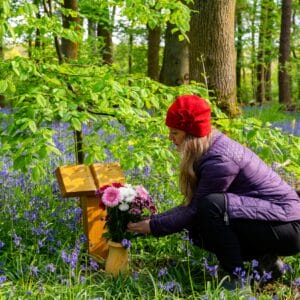
Instead of using an imported headstone, you can add to the natural landscape by planting a memorial tree. Available at GreenAcres, a Living Memorial Tree will last for generations and serves as a living legacy to your loved one. The first set of ashes are scattered with a sapling tree. Once they’re interred beneath the root-ball, ashes from other loved ones within the family can be added around the tree as it grows to be a big and magnificent tribute.
In some Parks we are also able to offer a dedicated standard Rose Bush. This provides the perfect opportunity for family ashes to be interred close to the roots in a biodegradable urn, where they can live on through the beautiful roses.
If you’d prefer a headstone, why not opt for a wooden memorial? 87% of our memorials are wooden, and five of our Parks have no imported granite or marble, making wood a kinder option for nature. We also offer local UK stone, if that’s what you’d prefer.
Whatever your wishes, we are here to work with you and your Funeral Director to give you a personalised service and the support you need to plan an eco-burial. Get in touch with us to find out more.
Experiencing a death can make the ‘firsts’ of everything incredibly difficult.
The first Christmas, birthday and anniversary of a loved one passing often remind us of the people we lost, forcing us to face up to the fact they’re no longer with us. But while these occasions can be painful, they also offer us the chance to reflect on precious memories and commemorate our loved ones, giving these occasions a brand-new meaning.
It’s normal to feel sad, lost and even angry in the run-up to a special event – but you should never feel bad for celebrating. While there’s no right or wrong way to approach anniversaries and occasions after a death, we’ve got some tips on how to handle them.
Plan the day in advance
You can help prevent unwanted heartache by planning your celebration in advance. You might want to get the whole family together to celebrate the day – or perhaps you’d feel more comfortable watching films and eating nice food by yourself. Whatever you decide, figuring out the itinerary in advance will help empower you to cope with your feelings in the way you feel most able.
It’s important to be kind to yourself if you feel like changing your plans on the day. Similarly, if you agree to go to an event but don’t feel up to it, don’t be hard on yourself. You have to take things at your own pace. Your nearest and dearest will understand.
Write your feelings in a journal
In the run-up to a first event, it’s not unusual to have endless thoughts running through your head. You may feel fine one minute and upset about the thought of your loved one not being there the next. To help channel your feelings, try writing down how you feel. You might want to focus on:
- The challenges you’re facing
- How you’re trying to overcome them
- What’s making you feel most stressed out
- What you hope to achieve over the next year
- What’s made you feel good recently? It could be something as simple as a walk in the woods, feeling the sunshine on your face or having a laugh with a friend
You might also find it helpful to write your loved one a letter with everything you’d say to them if they were still alive. Take the letter to their grave or tuck it somewhere safe – like in a memory box or memorial. That way, you’ll feel closer to them.
Respect other people’s wishes
During Christmas, Easter and other shared events, you might find that your family and friends want to celebrate it differently to you. People deal with grief differently – and that’s completely okay. The important thing is to respect their wishes but also be sure to do what’s right for you. You don’t need to do anything you’re not comfortable with – and the same applies to your loved ones. You can all celebrate in different ways and come together when you’re ready to do so.
Find ways to honour their memory
Your loved one may have passed away, but that doesn’t mean you have to forget about them. By honoring their memory, you can include them as part of your celebrations long after they’re gone. You can do this by dedicating time to put flowers on their grave, doing something they loved or sharing stories about them with your friends and family. Plus, anniversaries and birthdays can allow you to reflect on precious memories, serving as a day to celebrate their legacy for years to come.
Start new traditions
It may help you to cope with your grief by starting new traditions. Time moves on, and so does the way we honour our loved ones. You could watch their favourite film on their birthday or cook their favourite meal. Whatever you do, it doesn’t have to be anything big. Try to find something that reflects them and their personality and it’ll feel like they’re with you in spirit.
Embrace your tears
If you feel sad and need a good cry, it’s better to let your emotions out than keep them bottled up. Tears aren’t a negative thing – they show how much you care. Crying can be healthy, so let your emotions guide you as you navigate through the first events after their death.
However you’re feeling, you never have to grieve alone. Our Bereavement Cafés are held within the beautiful landscapes of our Parks where you can feel the uplifting and healing power of nature around you. You will find a kind, supportive space with understanding from others who are also living life after loss. We provide additional resources including a collection of grief books and signposting information to other bereavement organisations.
We promise you a warm welcome from our experienced and compassionate team along with tea, coffee and cake! This event is FREE for anyone bereaved in the local community surrounding the Park. Find your nearest event here.
Gone are the days when funerals meant mourners wore dark colours, sang hymns and were led by a religious official in a place of worship. Today, funerals are becoming a more personal affair, with the deceased having a much bigger say in what they want to happen at their funeral before they die.
Tradition isn’t for everyone. Whether you’re planning your own funeral or organising a ceremony for someone you love, here are some ways you can make it more personal to reflect the life that was lived.
Ask mourners to wear bright colours
One of the most common ways to personalise a funeral is to ask mourners to wear bright colours. Bright colours are typically seen as a celebration of life, bringing comfort to those who are mourning and feeling anxious about the ceremony.
According to a study by YouGov in 2016, only 22% of people see black funeral attire as a requirement at funerals, with a further 29% believing any colour is acceptable. You may want to specify a specific shade – perhaps your loved one’s favourite colour. Or you could even suggest that mourners wear the colours of the football team your loved one supported in life. Sometimes ‘anything but black’ is enough of a steer to help people decide what to wear.
One of our Park Managers shared this heart-warming story with us about one of the funerals held in their Park:
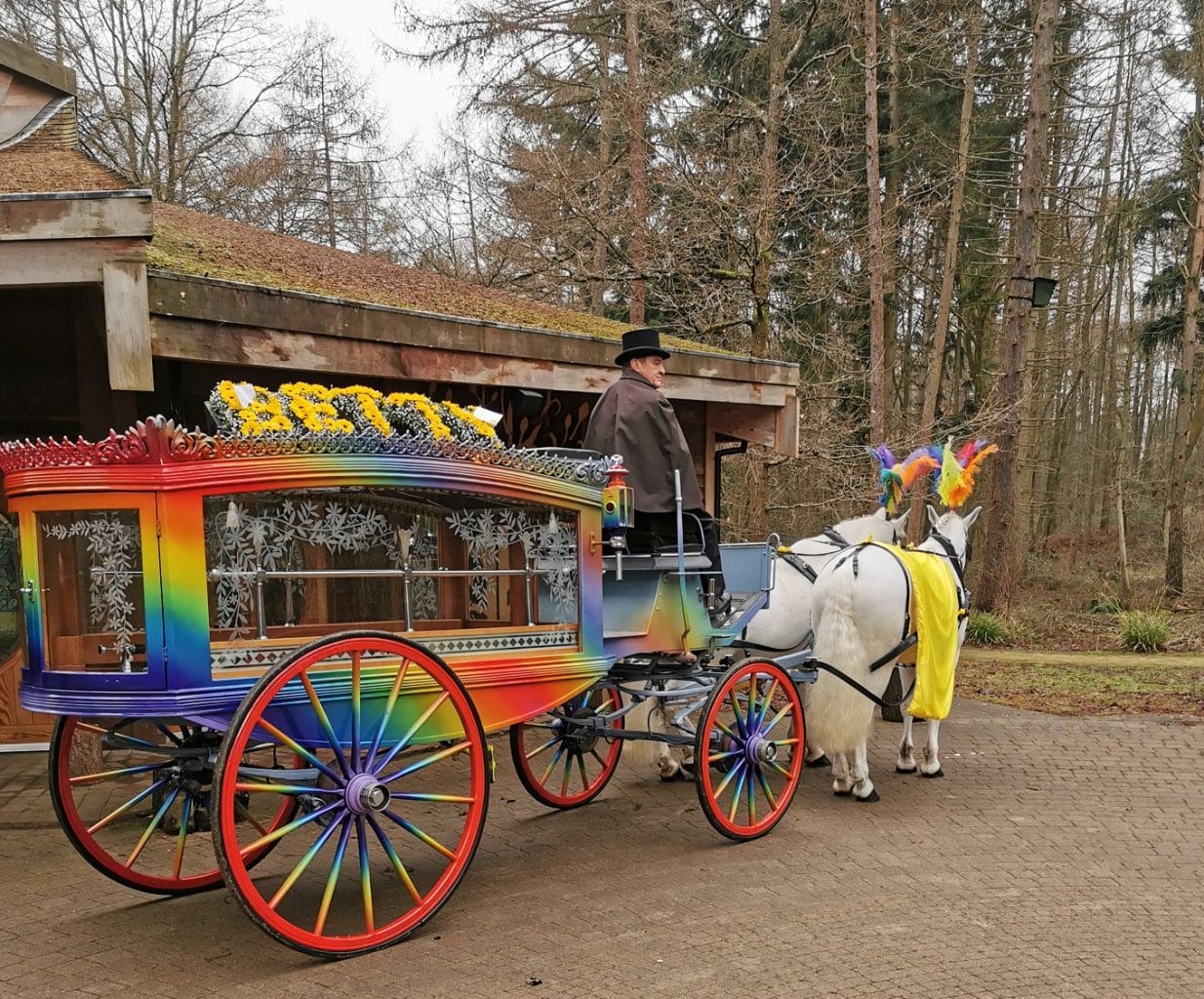
“One that sticks out for me at Chiltern is a lady who had a service and burial. She was super flamboyant and extremely colourful in all aspects of her life – from how she dressed to the colour of her hair. All the guests were dressed in many different colours. Her daughter also wanted to do something special and found a beautiful multi-coloured horse and carriage to take her mum to her final resting place. It was such a beautiful service, and it was an honour to help the family.”
Choose a unique coffin
You can make a coffin as unique as you’d like it to be. From bright colours and bespoke themes to prints and sporting crests, there’s no end to the options available to you.
There are picture coffins to consider, too. These are coffins adorned with a particular picture that takes inspiration from the deceased’s favourite places, hobbies, or sports. You can even have their favourite photograph printed onto the coffin, serving as a celebration of their life long after they’re gone.
Create a unique floral display
Celebrate your loved one’s passions by creating a unique floral display. You could create an open book floral arrangement as a tribute to a bookworm, or have the flowers arranged as an instrument to celebrate a musician. If your loved one was a keen gardener, why not include their favourite flowers and plants from their own garden?
No idea is too difficult for the right florist. Talk to a local funeral florist about your ideas, and they’ll find a way to bring them to life.
Have a civil ceremony led by a celebrant or humanist
Funerals led by a celebrant or humanist are now very popular. Humanist ceremonies tend to be non-religious, which is one of the main reasons why people choose to have one. Civil celebrants tailor the service entirely to the deceased’s wishes, allowing them to have as much or as little religious content as they like. Both types of ceremony can be spiritual and are fully flexible to represent the life you or your loved one lived.
Use alternative transport to a hearse
A traditional hearse is most widely used to carry a coffin to a funeral, but there are several companies in the UK – like Morton’s Funeral Hire , TCribb and Bennetts Funeral Directors – that specialise in transforming unique modes of transport into hearses with enough space to hold a coffin. Instead of a classic hearse, you could choose a:
- VW Campervan
- Classic Mini
- Rolls Royce
- Morris Minor
- Austin 6CWT Van
- Jaguar
- Military vehicle
- Vintage lorry
- Motorcycle
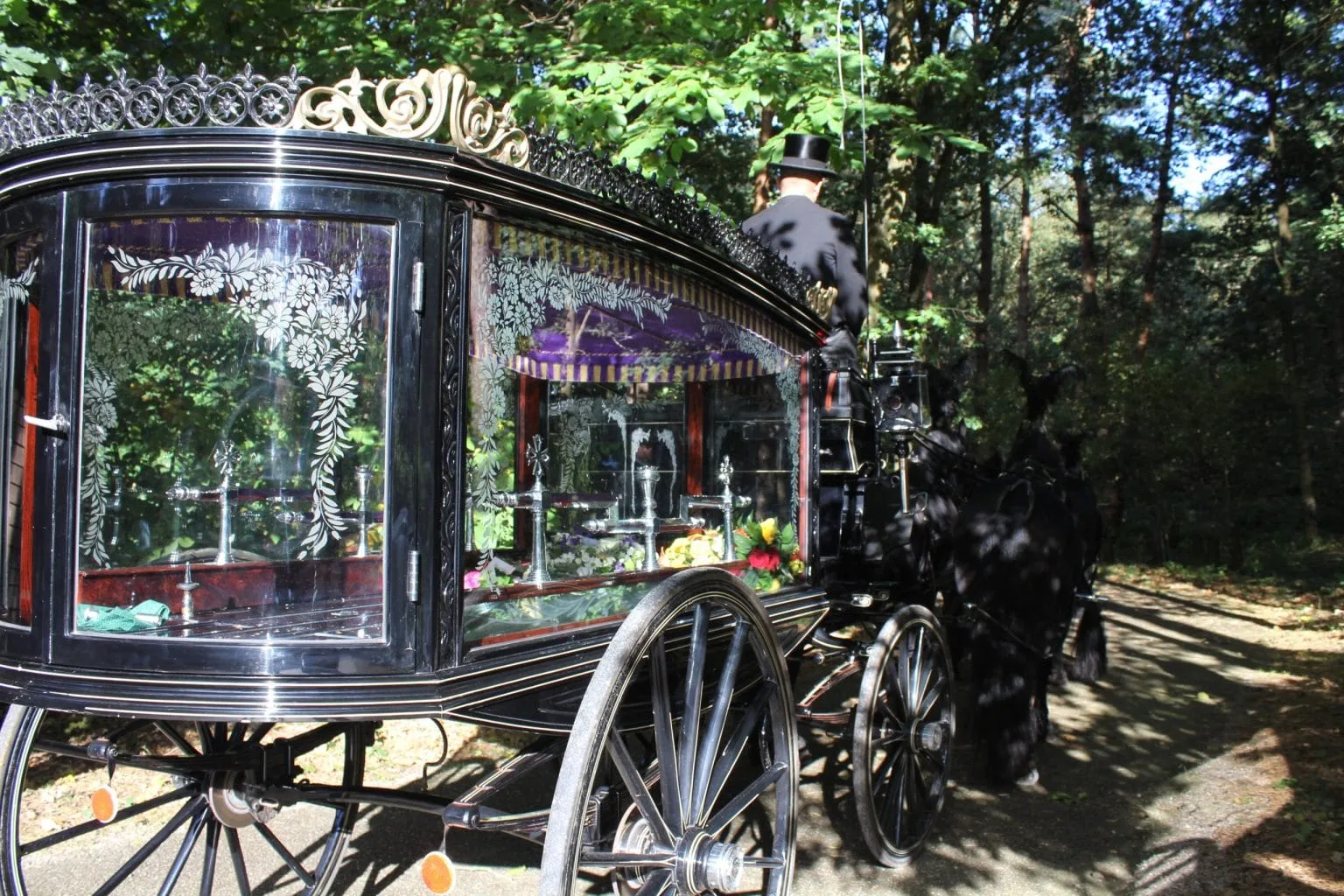
You could even choose a traditional horse-drawn glass hearse, giving your loved one the magical send-off they deserve. Speak to your local funeral director to discuss your requirements in detail and see what’s possible.
Add personal finishing touches
Here are some finishing touches you might want to consider to make a funeral more personal:
- Create a photo wall with a selection of photographs of your loved one
- Leave a memory book for mourners to sign with their favourite memories
- Hand out seeds to mourners that they can plant in their garden as a living tribute
- Personalise the music by picking your loved one’s favourite songs
You could also decorate the Service Hall with things special to your loved one – like this family did at one of our Parks:
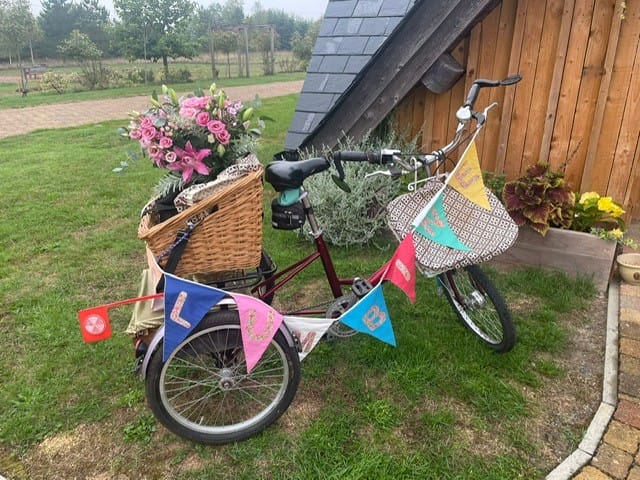
“We had a burial service for a lady in her 90s who was well known in Grayshott village for cycling around on her tricycle and being very active in the area. She was also a great quilter, and her family brought all her quilts and bunting which we used to decorate the hall. Her famous tricycle also played a part! Her service was a wonderful celebration of her life and the family were very pleased that it was so personal and special.”
If you’d like to arrange a more personal funeral for yourself or a loved one, speak to a friendly and knowledgeable member of the GreenAcres team and we’ll do everything we can to accommodate your wishes.
Children deal with loss in many different ways. Particularly since the death of Her Majesty the Queen and the war in Ukraine, children of all ages have been asking more questions about bereavement and what happens after someone dies.
Though it’s natural to worry about saying the wrong thing, speaking to children about their thoughts and feelings after the death of a loved one is an important thing to do. After all, they’re just as affected by death as we are. Plus, children’s imaginations run wild, causing unwarranted stress and fear.
You may not know where to begin – and that’s okay. This blog will help you navigate the process and show you how to talk to children about grief.
Be honest about what has happened
The first – and arguably most important – step is to explain what happened honestly and clearly. Use plain language the children can understand. For example, it’s better to say, ‘someone has died’ rather than ‘passed away’ or ‘gone to sleep’. The latter will only confuse them.
Depending on the children’s age, creating stories to help them relate to the situation may help. During this time, let them ask as many questions as they need. It’s important that you answer truthfully, but try not to overburden them with information. Giving short, to-the-point answers will help them process what’s happened.
Remember, the conversation about death is an ongoing one. Try to be as willing as possible to answer questions when they have them. Children ask questions at the most random times, but accommodate them as best you can.
Offer reassurance
After experiencing a death, children often worry about their friends and family dying. While you can’t make promises about the future, you can reassure them that they’re loved and will always have someone to care for them should the worst happen.
It’s best not to go into too much detail about this. As we’ve mentioned, children’s imaginations often get the better of them, so be careful not to put scary ideas into their heads. Instead, shower the children with love and affection and spend time doing fun things with them – like painting and baking – to take their minds off their worries.

Don’t hide your feelings
Children are incredibly observant and will pick up on your feelings, even if you’re careful not to show them. Instead of hiding that you’re sad, let them see your emotions. That way, they’ll feel like they can openly share theirs without feeling suppressed. They’ll also develop a healthy relationship with death moving forward.
Give your child space to play
While talking about death is good for a child’s development, it can be an intense and upsetting experience. Children need their own space to partake in normal activities – either alone or with friends. Grief affects children differently, so don’t be alarmed if yours act like nothing’s happened. Your child’s grieving, even if it doesn’t seem like it.
Help them express their grief
Not all children like to talk about their feelings. Some find drawing or writing about how they feel more cathartic. If your child is finding it hard to talk about death, encourage them to express their grief creatively instead.
They might want to write a poem or letter to the person who’s died. Or they may prefer to paint or draw a tribute to a loved one. Creating a memory box can also help children express grief. Fill it with pictures, letters, stories and anything that reminds them of the person who’s passed away.
Worry Monsters can also help. These soft plushie toys are designed to help children express their worries. Ask your child to write a note or draw a picture of their worry and place it into the monster’s mouth. When they’re asleep, remove the note and in the morning, your child will notice that the monster’s eaten their worries. This should enable them to manage intrusive thoughts about death.


Let them get involved with the funeral
There are no set rules about children attending funerals. It’s up to each family to decide what’s best. However, if your child expresses a wish to go to the funeral or memorial service, you might want to consider letting them.
Funerals signify finality, which can help your child process the loss. Younger children may not understand what’s happening, but older children may take comfort from saying their goodbyes surrounded by their friends and family.
Remember, you’re not alone
You never have to do any of this alone. At GreenAcres, we’re here to offer you all the support you need. Join us at one of our monthly Bereavement Groups or remembrance events to meet others who can relate to how you feel over a cup of tea and slice of cake. We promise you a warm welcome and friendly ear whenever you need it.
Hope Again is another excellent resource where young people can learn how to cope with grief and feel less alone. There’s lots of useful information, including personal stories, grieving guides and help for parents and guardians. Similarly, Child Bereavement UK offers an abundance of resources to help parents, guardians and carers support bereaved children and young people.
You can also head over to our blog for more resources on how to deal with loss – including what to do with ashes and what to do to a person’s social media account when they die.
It has been a very special and busy tree planting season for GreenAcres teams! From October 2021 to March 2022, Parks across the UK have taken part in The Queen’s Green Canopy (QGC). This unique tree planting initiative marks Her Majesty’s Platinum Jubilee in 2022. It encourages people across the United Kingdom to “Plant a Tree for the Jubilee.”
The Parks have been proud to be part of creating a legacy in honour of The Queen’s leadership of the Nation, which will benefit future generations. They invited some wonderful people to plant trees from all walks of life, who shared their thoughts on what being involved in the project meant to them.
Rainford Park in Merseyside was joined in November 2021 by Lord Derby, well-known across the Liverpool area as the owner of the beautiful Knowsley Hall and Knowsley Safari.
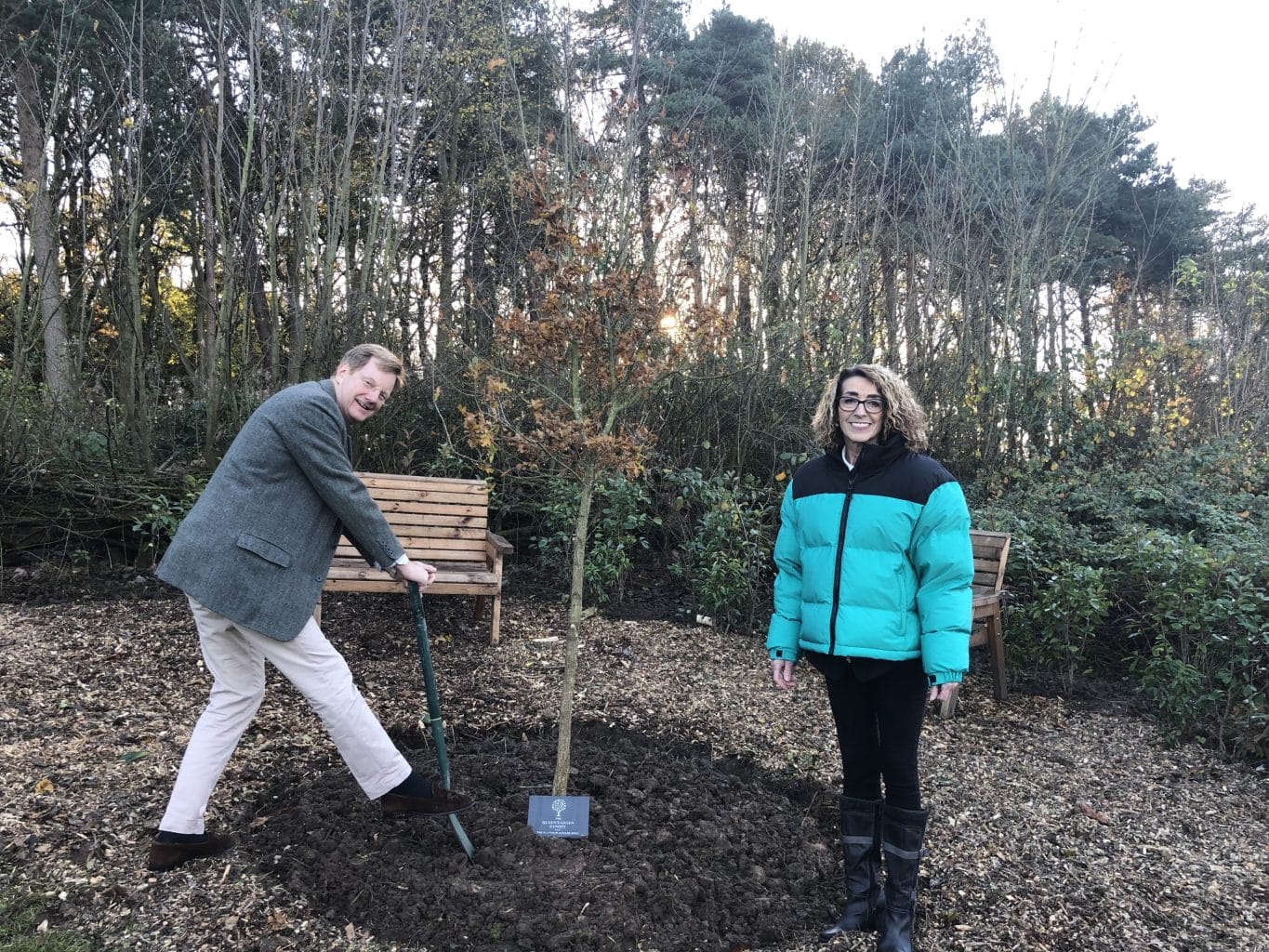
He shared his thoughts on planting the tree at GreenAcres: “Trees are absolutely vital for our survival. Without them we would literally have no oxygen to breathe, and humanity would die. So planting trees is a fabulous legacy for this Jubilee project. Her Majesty has been like a magnificent oak tree – solid, dependable, always there acting with integrity, and has a real interest in everybody she meets”
February 2022 saw Kemnal Park in Kent welcoming local Reverend Trevor Wyatt, Chairperson of Bexley Interfaith Forum: “I believe that The Queen has been the most exemplary example of Christian service to our nation and to the wider world. She has been a figure of unity for the UK and has been able to bring people together, from across all faith traditions and none, particularly when we have faced challenging times. Planting this tree is a tangible sign of our support for Her Majesty and all she has done. It is also a sign of our commitment to act for the good of the environment and the future of our planet.”
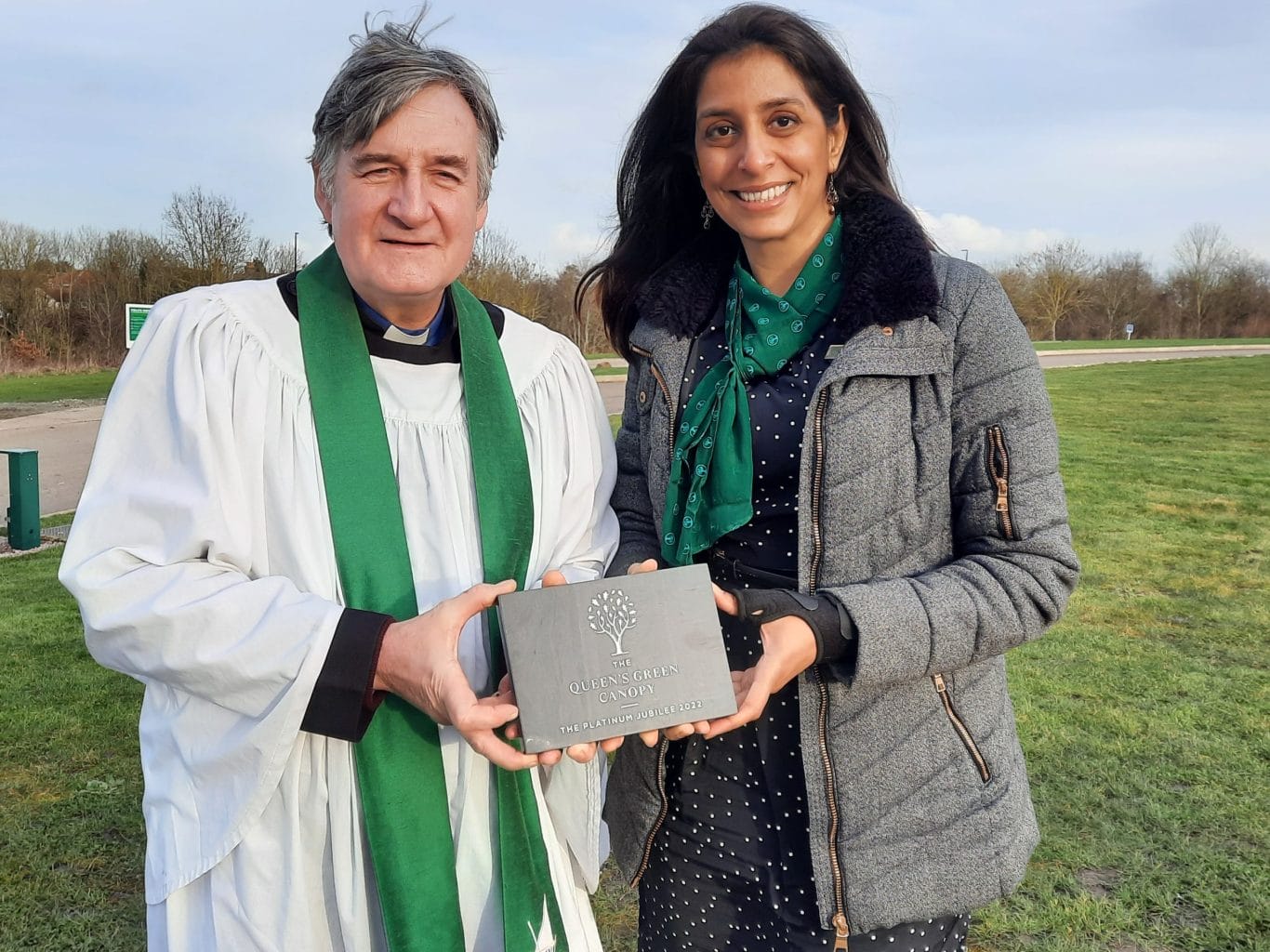
The remaining four Parks planted their trees in March 2022. Perhaps the most moving occasion was with Sir Trevor Phillips as he joined the team to plant a tree at Epping Forest Park in Essex, the final resting place of his eldest daughter, and holds a very special place in the hearts of his family. Sir Trevor poignantly commented, “This particular location carries three separate meanings for me. First, the human race faces two great challenges: how we live with our planet and live with each other. Of course, the central mission at GreenAcres is to preserve and enhance the natural environment, and the Queen’s Green Canopy will be a huge contribution to that mission.
Second, the tree honours Her Majesty and her decades of service. Particularly her role in reminding us that we are one nation with all our diversity.
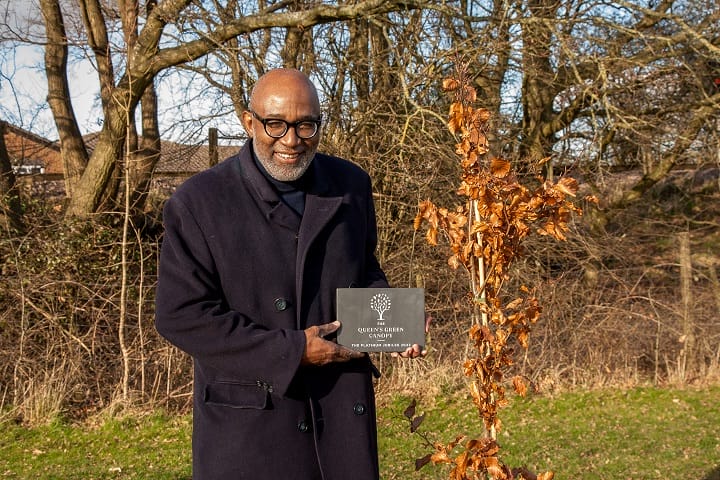
And third, this is the final home of my elder daughter and will probably be my own. Preserving our species is not just a matter of keeping our physical beings alive. It is, even more importantly, an act of memory that holds the human story alive and a marker that will encourage those who come after us to tell our stories for ages to come.”
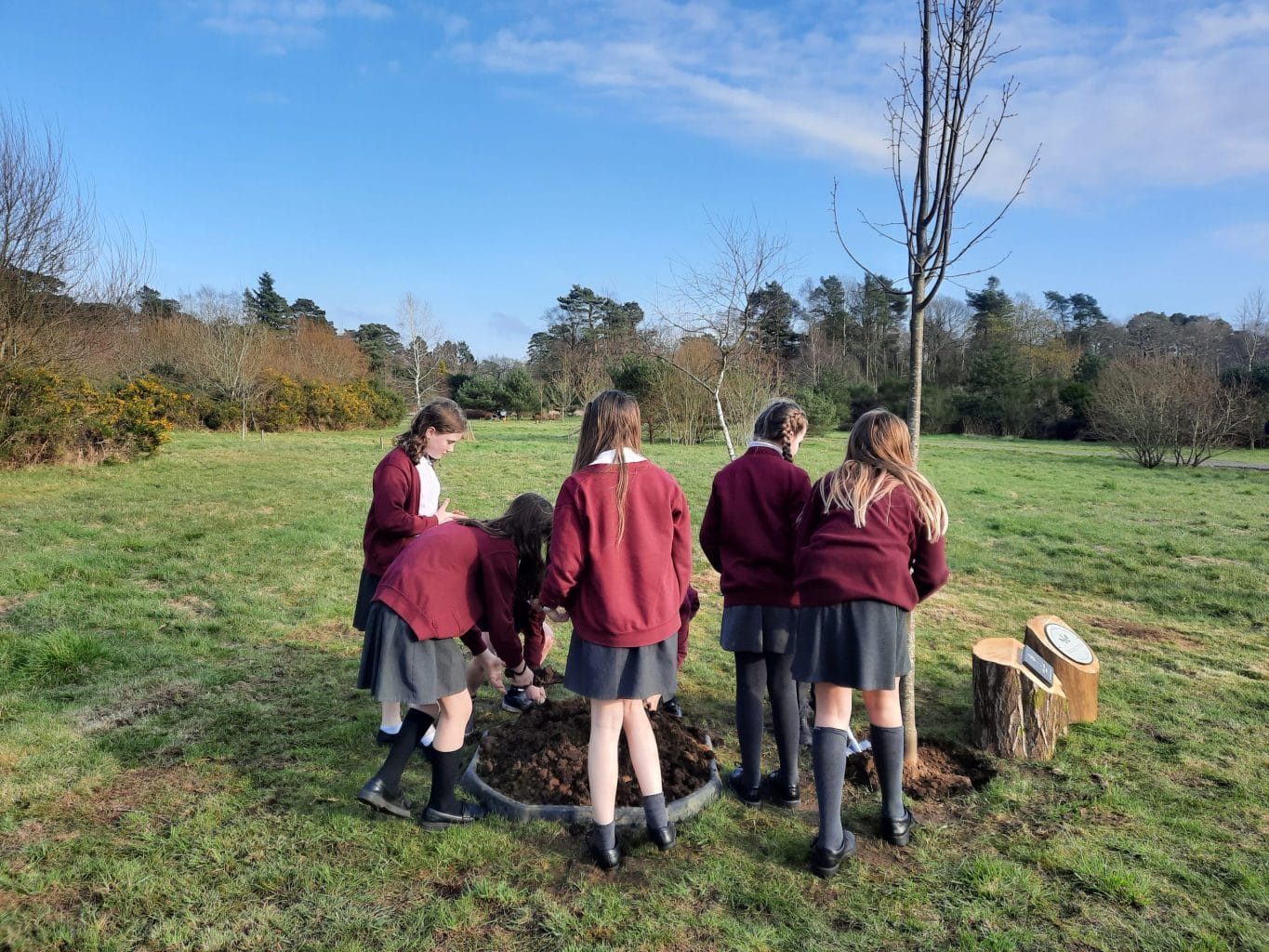
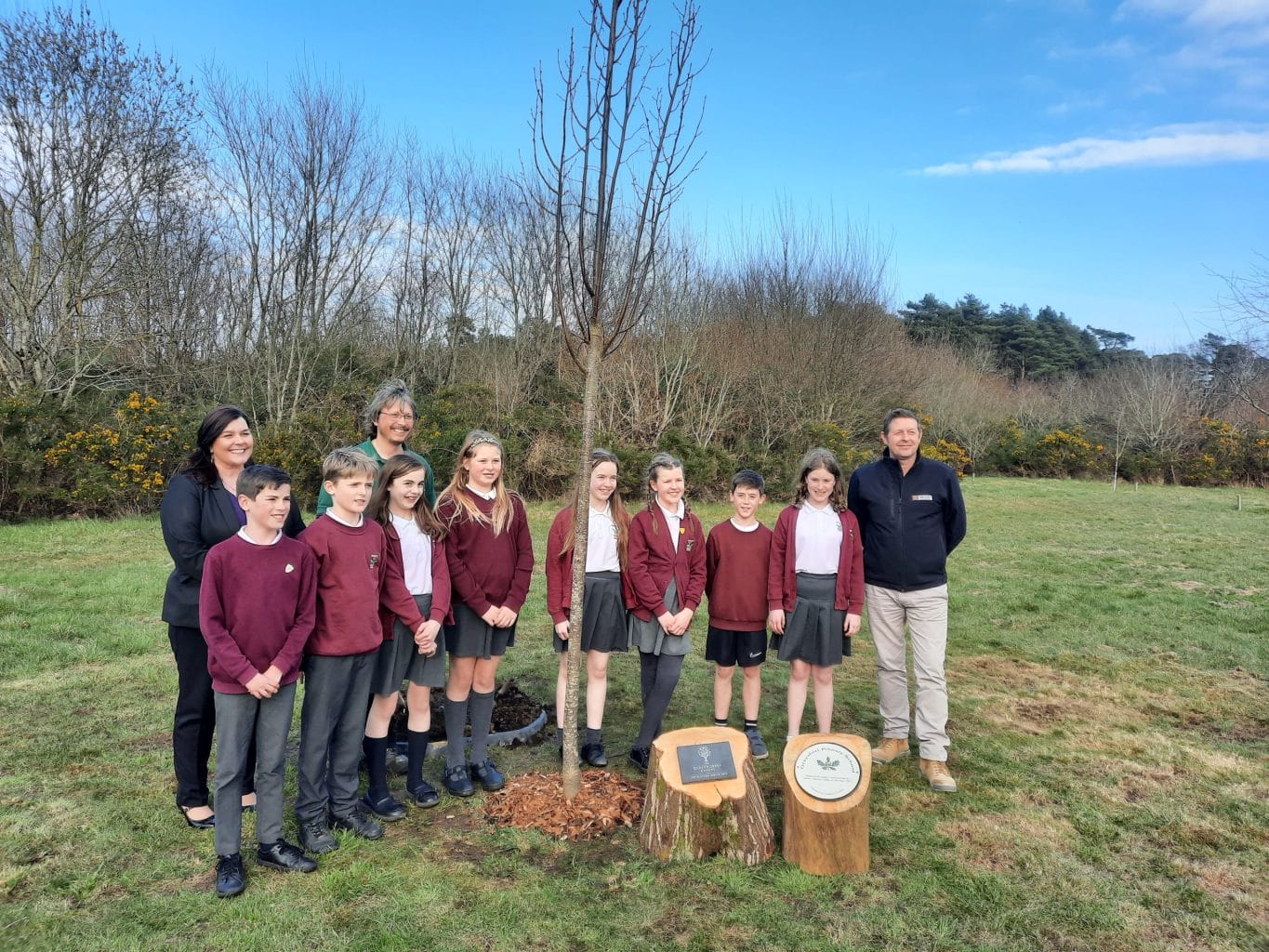
Heatherley Wood Park in Hampshire had a fun time with the House Captains from local Grayshott CE Primary School. The House Captains enjoyed a lot the tree planting. Also, showed off some of the skills learnt from their school’s gardening and allotment club.
There was a distinctly royal feel at Colney Park in Norfolk and Chiltern Park in Buckinghamshire, which was both lucky enough to have one of The Queen’s representatives for their counties to plant the trees.
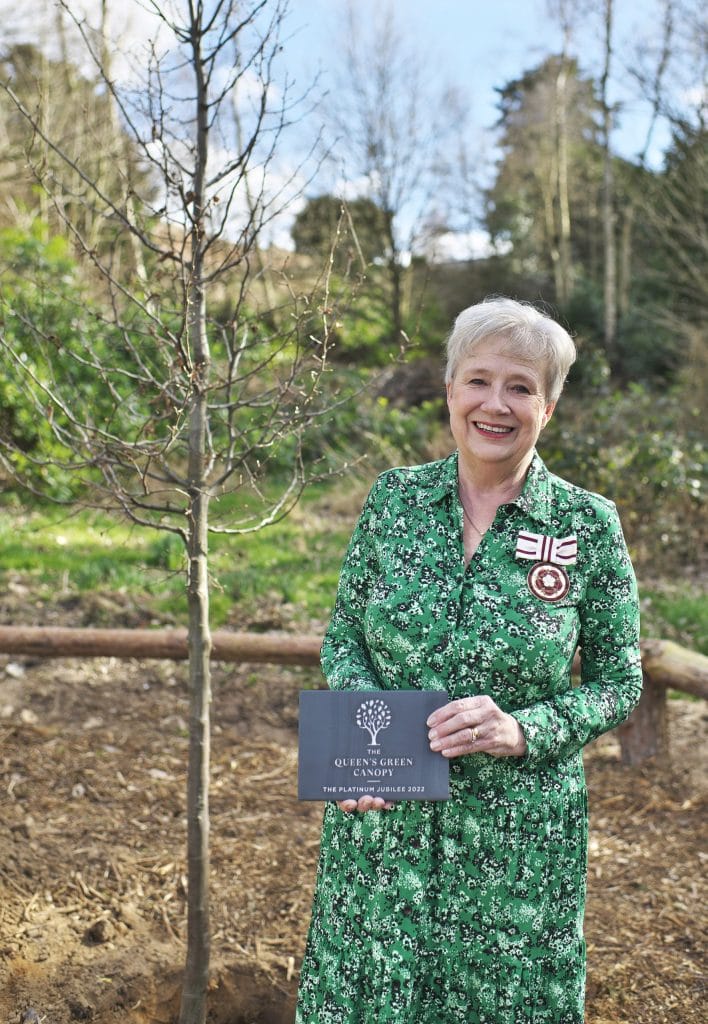
Carol Bundock, Deputy Lieutenant of Norfolk, commented on the environmental legacy of the Queen’s Green Canopy. She said, “It is a wonderful way of celebrating the Platinum Jubilee. What better place to plant a tree than here at GreenAcres Colney. A place of peace and tranquillity, with nature all around. I’ve conducted many services here as a Celebrant, and I think it totally fitting that another tree is added to the existing green canopy.”
Countess Elizabeth Howe, Lord-Lieutenant of Buckinghamshire shared her thoughts on the service The Queen had given the UK:
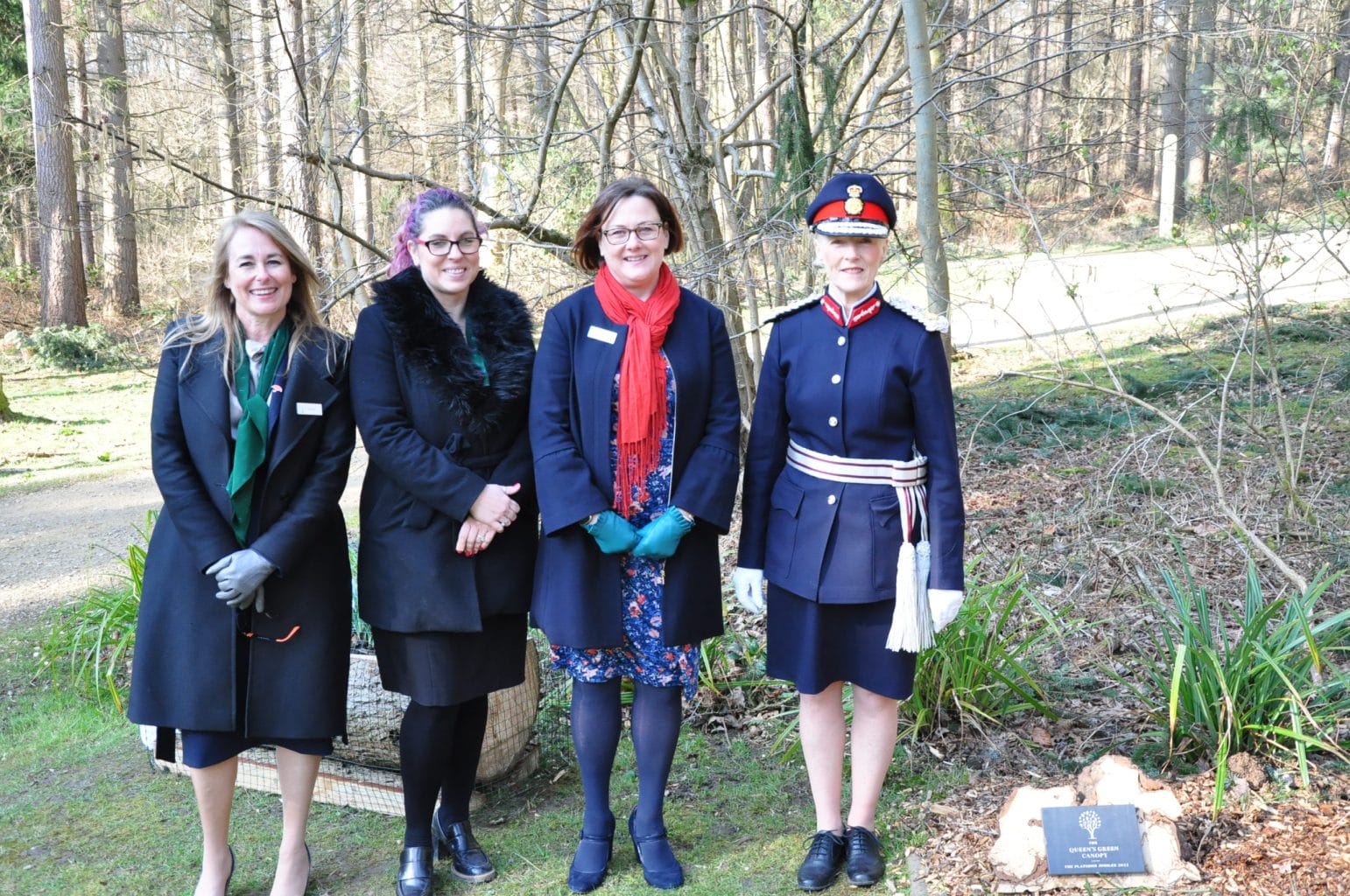
“She has given dedicated service to this country, the Commonwealth and the world for 70 years. Not only is she the longest reigning monarch in our history but she leaves an extraordinary legacy. She has the deepest affection and utmost respect for all, whose lives she has touched.”
The Parks will remember the people and the stories behind the planting of these special trees for years to come. And they will be there for future generations to enjoy as they grow and flourish. You can visit the new areas created at any time during Park open hours. Look out for the beautiful Queen’s Green Canopy commemorative plaques in Welsh slate marking them!
When a loved one dies, there are many things to think about – like notifying friends and family, arranging the funeral and deciding what to do with the deceased’s ashes. However, one thing that’s less commonly considered is what happens to a person’s social media account when they die.
We understand that dealing with someone else’s social accounts can be overwhelming. It’s also unlikely to be at the top of your agenda. So this blog will explain your options and guide you through the process in simple steps.
What happens to social media accounts after a death?
After someone close to you dies, there are three main options available to you. Before you decide, check to see if your loved one left any specific instructions about what to do with their social media accounts. Otherwise, you can take action in one of these three ways:
Delete their social media accounts
If you’re worried about your loved one’s accounts being hacked or don’t want people to be able to interact with them, you can delete them. Doing so will permanently remove photos, videos and information stored about them on social media.
Deactivation is permanent, so be sure to save anything you want to keep before you proceed. It’s also wise to talk to family and friends before you do anything. They will need time to raise concerns, come to terms with your decision, or save any content they wish to keep.
To close someone’s account , you’ll need:
- Their full name
- A link to the profile
- Proof of their death, such as a death certificate
- Evidence of your relationship to the deceased
You may also be asked for further proof, but each social media platform will advise you of what they require to carry out an account deactivation before they begin the process.
Turn their social media accounts into an online memorial
For some, deleting a loved one’s social media accounts feels too final. Instead of removing their digital presence, you may prefer to turn their accounts into an online memorial for friends and family to remember them by.
Doing this keeps their photos and videos intact. But it changes how the accounts work by preventing people from interacting with them. A memorialised profile also makes it clear to visitors that the person behind the profile has passed away.
You may find that turning their accounts into an online memorial is a good way to help you and other friends and family grieve – at least in the immediate aftermath of a loved one’s death. You can always delete the accounts later on if leaving them online becomes too painful.
You’ll need to bear in mind that the leading social media providers, including Facebook, Instagram or Twitter, handle memorial pages differently, and not all offer the option to memorialise them. Look at their help pages for in-depth help and information.
Here are some helpful links to point you in the right direction:
Contact Facebook and fill out the request to memorialise form.
Contact Instagram to request to memorialise a deceased person’s account.
Leave their social media as it is
You don’t have to delete or memorialise your loved one’s social media accounts if you don’t want to. Instead, you can leave them as they are. Some people find comfort from interacting with the account and seeing it pop up on the feed every now and then.
However, this isn’t for everyone. By leaving the accounts alone, automated features – such as birthday notifications and memories – will appear on their connected friends’ feeds. This can be upsetting to see, especially if the notifications appear unexpectedly or without warning.
You may want to make people aware of the passing by tagging the deceased in a social media post. That way, friends and followers can hide the account if it’s too painful for them to see it.
Get support with Life Ledger
You don’t have to deal with any of this alone. Life Ledger’s free, easy-to-use service helps simplify the death notification process by contacting all businesses (including social media) connected to the deceased. You can keep track of the progress and upload any required documents from a single place, saving you hours of time and removing the need to have the same difficult conversations over and over.
If you need support, contact our friendly and knowledgeable team for help and guidance through this tough time.
Writing a eulogy is a traditional way to say goodbye when a loved one dies. Also known as a funeral speech, a eulogy is given at a funeral or memorial service by someone who was close to the deceased to commemorate their life. This could be a child, best friend, mother or father.
There are no rules to what you can and can’t say in a funeral speech. A eulogy is unique to the person it’s written about, but writing one can leave those grieving feeling lost for words. We have some advice on how to make writing a funeral speech feel less daunting for those who want to remember and honour their loved one’s life.

Decide on the tone of your funeral speech
Traditional eulogies are personal, meaningful and heartfelt. They vary in tone, but they tend to be conversational to ensure that everyone attending the funeral or memorial service can understand and relate to the words being said.
Whether you choose to adopt an uplifting tone with a bit of light humour or prefer to keep the eulogy sombre and serious is entirely up to you. It also depends on the relationship you shared with the deceased.
When writing your eulogy, remember to keep in mind your audience. The last thing you’d want to do is offend or upset the mourners attending the funeral with an unsuitable tone.
Ask family and friends for their memories
Before you sit down to write your eulogy, ask family and friends of the deceased for their recollections. This will bring comfort to them during the funeral and may jog some memories they had long forgotten about, too. Brainstorming with loved ones will also give you an idea of which memories to focus on throughout your speech.
What to include in a eulogy
Perhaps one of the hardest things about writing a funeral speech is knowing what to include about your loved one’s life. While this will vary from person to person depending on their history, it’s traditional to focus on their achievements alongside a brief timeline of their life. To help get you started, you might like to talk about:
- Where the deceased was born
- The names of their parents and siblings
- Nicknames and a brief background behind them
- An overview of their childhood, including schools attended
- Academic qualifications and achievements
- Details of military service
- Marriages, divorces, children and grandchildren
- Hobbies and interests
- Interesting stories
- Detail about their personality and preferences
Introduce yourself
Before writing the main bulk of the eulogy, remember to introduce yourself. Not all mourners at the funeral will know who you are, so offer a couple of lines of context about who the deceased was to you. This will help provide background for the rest of the eulogy.
Thank people for attending
To help soothe your nerves and ease your way into the eulogy, thank everyone for taking the time out of their day to come to the funeral service. You can also use this section to express your heartfelt condolences before you start reading the rest of the eulogy. This may be the hardest part of the funeral speech, so remember to bring tissues to the front of the room with you in case you need them.
Share memories of the deceased
Many people like to dedicate the main bulk of their eulogy to sharing fond memories of the deceased. You can make your speech as personal as you’d like it to be, but focusing on stories about the deceased and the qualities that made them special is a fitting way to say goodbye. Funerals don’t have to be sombre – they can be a celebration of life, so try to maintain a positive tone throughout this section to help lift the spirits of those in attendance.
Close the eulogy with comforting words
When closing the eulogy, say your final goodbye and finish by offering some words of comfort to the other mourners. You may want to end with your loved one’s favourite poem, quote or saying. Then, conclude your speech with a final goodbye.
Keep your speech short and sweet
Try to keep your eulogy around 3-5 minutes long. This is the perfect length to keep the audience’s attention while allowing enough time to delve into detail about the deceased’s life. Speak to the person organising the funeral about how long you have and time yourself to ensure you stick to the time limit.
If you need advice about funeral planning or a friendly ear to talk to, we’re here for you. Nothing is too much trouble, so come and speak to our friendly and knowledgeable team for more information.
It may seem strange to be thinking about your own death and what happens afterwards. But planning how – and where – you’d like to be remembered is part of your legacy. When the time comes, it will give your family peace of mind to know they’re carrying out your wishes.
There are several components to end-of-life planning, some of which may help you and those close to you prepare. To help make this daunting task feel a little easier, we’ve got some tips on how to get things in order before it’s too late.
Why plan ahead?
Getting advice about later life planning is important, as it can help make things feel much easier later down the line. Planning ahead can also take the pressure off your family and significantly reduce the cost of your funeral.
We understand that planning for your death ahead of time can feel overwhelming. If you need additional support, Life Ledger offers a free, easy-to-use service that allows families to notify every business connected to the deceased from a single place. Life Ledger can help individuals and families before they experience a bereavement with simple and easy end-of-life planning.
Here are the other main things you should think about before dipping your toe into funeral planning.
Ensure you have an up-to-date will
Having an up-to-date will written by a solicitor is vital in ensuring your wishes are respected and followed. A legitimate will also free your family from the burden of difficult decisions and legal complications.
If you don’t yet have one or are unsure of where to start, March is Free Wills Month. Supported by a group of well-respected charities, Free Wills Month offers anyone aged 55 and over the opportunity to have a simple will written or updated free of charge by participating solicitors across England, Scotland, and Wales.
To get involved, simply enter your details on the Free Wills Month website to find participating solicitors near you.
Appoint an individual with durable power of attorney
A durable power of attorney is an important legal document that gives another person the right to make decisions about your finances, health and welfare should you become incapacitated. Choosing someone you trust, such as a friend or loved one, negates the need for costly and stressful court action should the worst happen. This is especially important if you’re unwell or suffering from a long-term or terminal illness.
If you need help in coping with a terminal illness, Hospice UK’s Dying Matters Campaign is committed to creating an open culture in which we’re comfortable about talking death, dying and bereavement. Visit the website for helpful resources and more information about how the charity can support you.
Specify preferences for your funeral, burial, or cremation
Everyone deserves to have their wishes met when the time comes. Regardless of your spiritual or religious beliefs, choosing whether you’d like a funeral, burial or cremation is a big decision to make. However, thinking about it as early as possible helps take the stress away from your loved ones during a difficult time. Ultimately, the decision is up to you, but talking through your options with your loved ones will make the choice much easier.
We understand that this step can be the hardest of all. That’s why our friendly team of experts are here to help at every step, empowering you to make the right choices.
Select a resting place
Most of us believe that a final resting place is all about the deceased. It’s easy to ignore what will happen after you die – and many of us don’t consider how difficult the decisions are for the loved ones left behind. But choosing your final resting place before the time comes can bring you and your family a sense of peace before you pass.
When thinking about where you’d like your final resting place to be, GreenAcres is not only a place where your loved ones can reflect on your life, but a beautiful location to meet, go for a walk, and make connections that can last a lifetime.
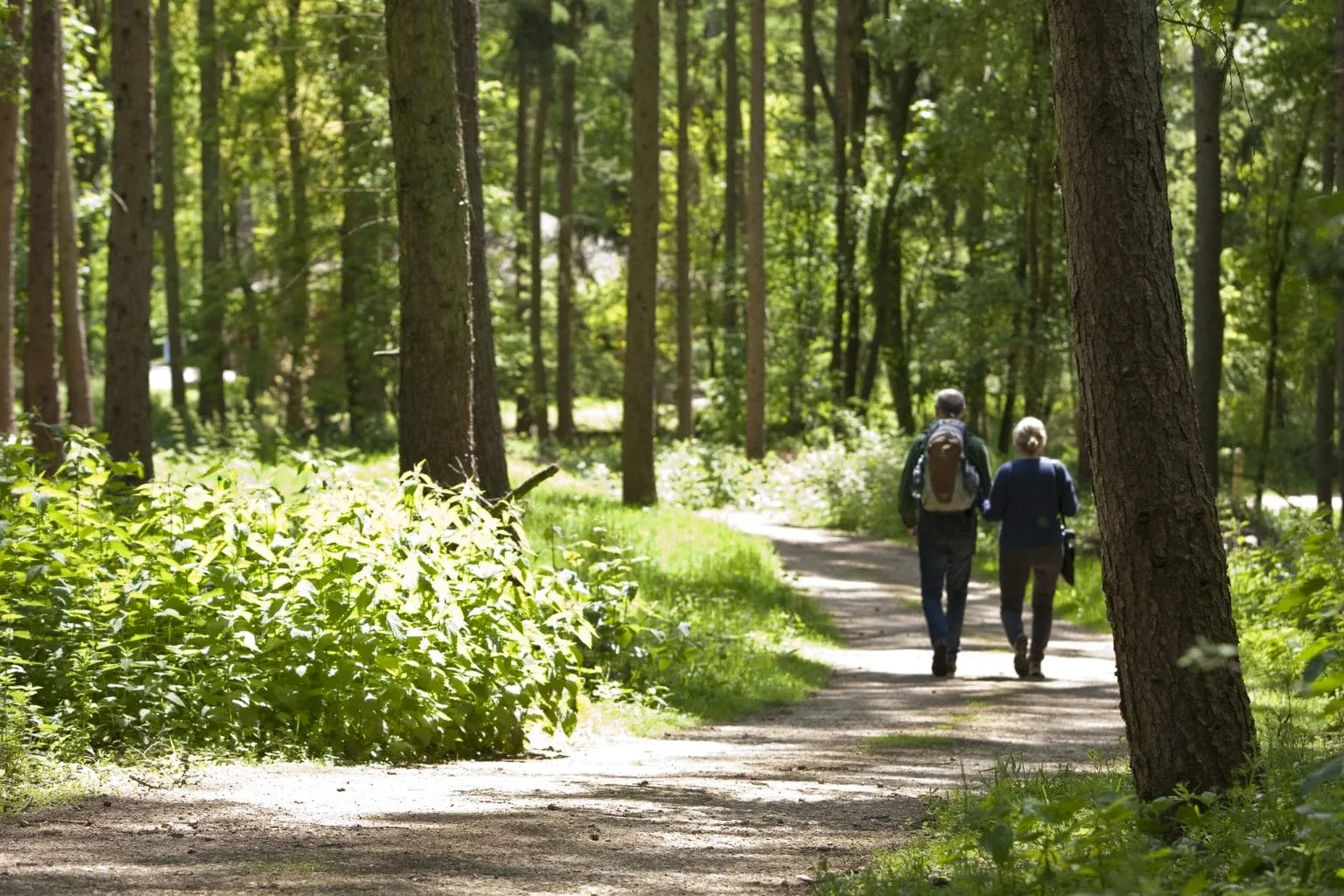
You can choose where you want to rest from a variety of settings, from peaceful sustainably managed woodlands and stunning wildflower meadows to relaxing, well-cared-for parkland.
Consider the environmental impact of your funeral
Whatever your wishes, you may want to consider having a sustainable funeral to minimise your impact on the environment. At GreenAcres, we take care to maintain our Parks so that your loved ones can enjoy them for years to come.
We’ve also implemented a range of eco and conservation policies to protect the landscape (such as plastic free). Additionally, we encourage the use of natural coffin materials, such as bamboo, cardboard, willow and banana leaf, wherever possible. You can even choose to have no coffin at all!
Explore themes, music, colours that you may wish your life to be celebrated
A funeral or memorial service is a unique way to celebrate the life you lived. While traditional funeral etiquette suggests that mourners should wear black, you might want to choose more vibrant colours instead to more accurately represent your life. You may also wish to select a theme that reflects your hobbies, interests, or culture.
Talk to your loved ones about your wishes, as they can help you plan the perfect send-off. They can also offer ideas that you may not have considered before. In fact, many families tell us that the conversation they’d been dreading turned into laughter and smiles.
Co-op Funeralcare has pulled together a list of the nation’s most popular farewell songs – and the top five may surprise you! Take a look to see if your favourite’s on the list.
Top of the (funeral) Pops include:
| 1 | You’ll Never Walk Alone | Gerry and The Pacemakers |
| 2 | My Way | Frank Sinatra |
| 3 | Always Look On The Bright Side of Life | Eric Idle |
| 4 | Simply The Best | Tina Turner |
| 5 | Supermarket Flowers | Ed Sheeran |
We’re here to help you every step of the way. Come and speak to our knowledgeable team to learn more about the options available to you for planning for the future. You may also benefit from attending one of our Later Life Planning Seminars run at many of our Parks throughout the year. See our website for more information.