Blog
What To Do With A Loved One’s Ashes After Cremation?
Find a comprehensive guide on what to do with a loved one’s ashes after cremation, including Living Memorials, Burial Parks, beauty spots and memorials.


Find a comprehensive guide on what to do with a loved one’s ashes after cremation, including Living Memorials, Burial Parks, beauty spots and memorials.
In the lead up to your loved one’s funeral, there will have been much to consider and plan. Opportunities to think about what you would like to do with their ashes after their cremation may have passed you by in a blur.
Know that there is no need to rush this decision. It is important to take your time so you can find the best way to honour your loved one’s memory while supporting yourself and others in grief. There is no right or wrong choice – only what feels right for you and your family.
With around 80 per cent of people in the UK choosing to be cremated, it is likely that you will need to think about what to do after the service.
Here, we aim to answer some of your questions, not only about what you can do with ashes after cremation, including information about the cremation process itself.
There are various ways in which you can honour your loved one’s life once their ashes are returned after cremation. Every family is different, and each person’s way of remembering someone they love is unique.
Some of the most popular include:
You can incorporate this as part of a broader celebration of your loved one’s life. In fact, the Co-Op Funeral Trends Report for 2024 found that over two-thirds of those surveyed believe funerals are now more like a celebration of life rather than a time for reflection.
In addition, the survey found that people are increasingly favouring unique funerals that reflect their loved ones’ lives and personalities, rather than following tradition. And there’s nothing wrong with taking this same approach when you scatter your loved one’s ashes.
Some families choose to honour their loved one in deeply personal ways. The Co-op Funeral Trends Report, for example, shared stories of ashes being incorporated into a firework display or released from a steam train, reflecting the unique passions and personalities of those being remembered.
When you’re deciding where to scatter a loved one’s ashes, consider a place that held special meaning for them.
It might have been somewhere they loved to spend time, a favourite walking spot, a destination for family holidays, or somewhere they often visited for peace and reflection, such as a local park.
This can be a lovely activity to carry out as a family, where you can share stories and talk about your loved one at the same time.
One study found that just over 69 per cent of people chose to bury or scatter ashes with friends and family present, and that doing so helped reduce the grief they felt compared to in situations where a loved one’s ashes were retained by a member of the family.
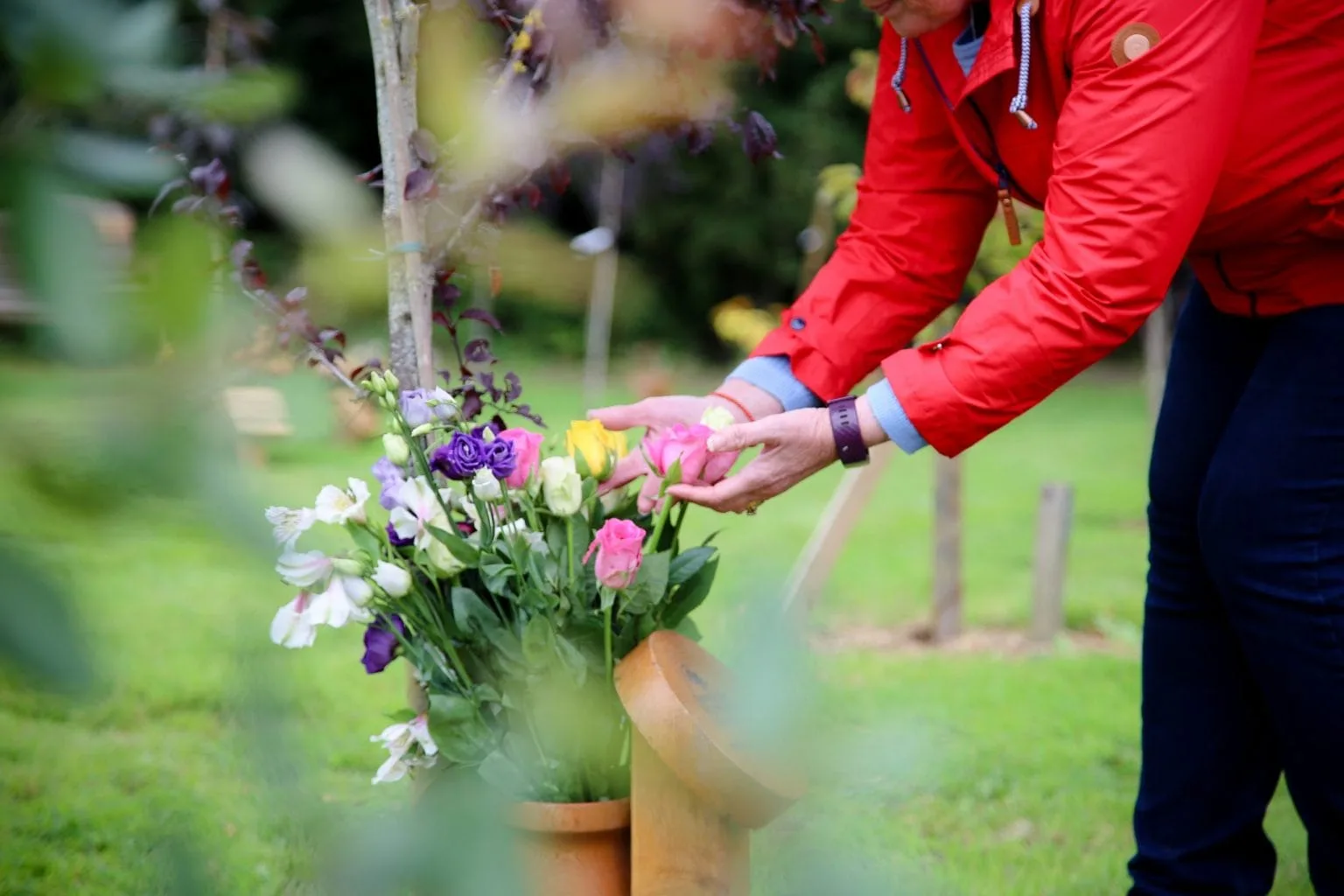
Many families find comfort in creating a Living Memorial with a loved one’s ashes, offering a peaceful place to remember them while celebrating a life well lived.
A Living Memorial is a beautiful tribute. It’s where you bury your loved one’s ashes in nature, such as in a green Burial Park. The idea is that their ashes support the plants growing around the site of their burial, providing a living, breathing space you can visit at any time.
There is no reason why you can’t choose to keep your loved one’s ashes in an urn and place them somewhere that holds meaning for you.
As with all elements of the grieving process, we each approach the loss of someone we love differently. For some, this may mean keeping a loved one’s ashes at the heart of the family home, while for others, it may feel more appropriate to keep the urn somewhere more private.
Remember that you don’t have to scatter a loved one’s ashes as soon as you receive them. Grief has no set timeline and there is no need to rush if you’re not ready to decide what you’d like to do.
If you do keep your loved one’s ashes at home, it’s important to keep a written record of where they are stored. It can also be helpful to share what you would like to happen to them in the future, as so those closest to you understand your wishes.
If you would like a designated location where you and others can come to connect with and remember your loved one, burying their ashes in a Tree Circle can be a wonderful option.
These are dedicated spaces in green Burial Parks, where you can lay your loved one to rest. Because they are shared resting places, they are clearly marked and this can give you a natural focal point in the form of the trees, rather than a grave, to visit.
Despite their name, Tree Circles are not only located in the woodland areas of our Parks. We also have Tree Circles in wildflower meadows, orchards and on lush lawns, so you can choose a space that feels best suited to your loved one.
If members of your family, or your loved one’s friends, have different ideas about how they would like to remember them, you may choose to divide the ashes so that everyone can honour their memory in a way that feels right for them.
Or you could consider spreading ashes in different locations that hold meaning for you – or even scatter their ashes at important milestones throughout a journey.
There is no right or wrong way to scatter ashes and connect to your loved one. If you and others in your family can’t agree, splitting their ashes can be an excellent solution that allows all of you to remember them in your own way.
Whether you need permission to scatter ashes depends on where you want to scatter them. In the UK, you can scatter ashes without permission in the sea or on any river or waterway.
However, you must ensure you don’t throw other tributes into the water that could cause pollution or harm wildlife. This means it’s best to avoid throwing wreaths into the water, for instance, as they can often contain metal or plastic parts.
When scattering ashes in a body of water, make sure the spot you choose isn’t near buildings, marinas or those using the water like bathers or those fishing.
The Environment Agency guidance also states you need to be at least one kilometre from where water is abstracted.
Alternatively, you can scatter ashes on your own land without needing permission to do so.
In other cases, you will need to seek permission from the landowner if you want to scatter your loved one’s ashes on private land.
However, there is no specific law covering the scattering of ashes and provided you are somewhere discreet and peaceful, there is unlikely to be any issue.
If you decide to scatter your loved one’s ashes, there are a few practical things to keep in mind to help the moment go as smoothly as possible. Stand upwind of the person releasing the ashes and scatter them gently from around waist height to help prevent them from being carried away by the breeze.
There are special devices you can use called scatter tubes, which can make it easier to spread someone’s ashes. It’s best to fill these before the gathering to make sure it goes smoothly.
Some countries allow you to travel with ashes that you wish to scatter. However, it’s important that you carry out research on the rules about travelling with ashes before you leave.
Among the paperwork it is helpful to obtain are:
Make sure you also check what the rules are for scattering ashes in your chosen overseas location too, so that you know you can do so once you arrive.
It often doesn’t take long for ashes to be available for collection following a cremation. In some cases, they can be ready as soon as one working day after the funeral. However, most funeral directors advise that it can take one to five days for the ashes to be ready for collection.
This means you can plan a separate ceremony to scatter their ashes within a week or two of the cremation taking place.
When someone dies, their body will be transported to a funeral director before they are cremated. Here, trained staff will remove any items that can be hazardous when burned, as well as any jewellery or prosthetics.
In most cases, the body will then be preserved in a cool storage space until the day of the cremation. Funeral directors do not usually embalm bodies that are due to be cremated, although they can if there is to be an open-casket funeral ahead of the cremation.
On the day of the cremation, staff at the crematorium will place a metal disc with the person’s name on it on top of the coffin. This disc can withstand the temperatures in the cremator and it ensures that the staff always know whose ashes they are handling once they come out of the cremator.
The cremation process itself is relatively quick, typically taking between 60 and 90 minutes depending on the type of coffin you selected. This is why it’s possible to receive your loved one’s ashes so promptly after their cremation.
Direct cremation simply means that you do not have a funeral service at the crematorium on the day of the cremation. If you want to mark your connection with your loved one and celebrate their life in nature, this may feel more fitting.
Some people prefer to collect their relative’s ashes and hold a funeral away from a formal setting like a crematorium, which is understandable.
GreenAcres provides burial, cremation and memorial services within natural woodland and parkland settings across the UK.
Our Living Memorial Parks offer a sustainable, nature-led alternative to traditional cemeteries, with ongoing care, memorialisation options, and spaces designed to support remembrance, reflection and wellbeing.
We also host community events, remembrance services and provide resources to support people living with grief. If you’d like to find out more, get in touch with the team today.