Blog
Can Nature Help You To Find Closure In Grief?
Find out more about how to find meaning following the loss of a loved one, how helpful looking for closure really is and why nature can be particularly healing

Find out more about how to find meaning following the loss of a loved one, how helpful looking for closure really is and why nature can be particularly healing

Everyone feels grief in a different way, and nobody’s response to losing a loved one will be quite the same.
Many of the steps are similar; we celebrate the life of the person we love, ensure they have a Ceremony that truly embodies who they were and what they meant.
Whilst seeking closure is universal, what this actually is will often be very different; there is no way it is supposed to look or feel, nor is there a timescale or even always a stated endpoint.
Closure is very complicated, but simple pleasures can often help you to find it. It is often found not in a single moment, but through the small steps we take to adapt to life after loss.
To understand why, it is important to explain closure, what it is and why part of the path to healing is walked through naturre.
The word ‘closure’ is deceptively simple for such a complex concept and in some respects, it is not always the most helpful term.
Closure implies an endpoint; the assumption is that there will come a day when we stop mourning and find a resolution to our feelings of loss.
In reality, closure is not about moving on but moving forward; it is about finding acceptance, understanding and relief; it is not about saying goodbye forever, but living your best life in their memory.
Sometimes this will involve a final goodbye, a release of the words we wish we were able to say. For others, it is about keeping a loved one in your heart and letting emotions and memories settle.
For others still, it is about continuing a legacy and ensuring that a part of them lives on, never to be forgotten. This could involve planting a tree in their memory, supporting a cause they loved or continuing a ritual or tradition they started.
Whilst there is a natural search for answers and a familiar, almost rigid idea of closure, this is not always possible. Not everything can be so cleanly moved on from.
Because grief is so often about the absence and ambiguity, framing closure as a hunt for answers and finality can sometimes be counterproductive, even if the search for closure often leads to solace.
This is sometimes known as the “closure trap”, and it comes from the idea that the goal of processing grief is to let go, accept and put everything behind you.
But this is not how people grieve. Most do not want to put their loved one behind them in this way.
Instead, many people have a continuing bond with their loved ones, establishing a new kind of relationship with them in the face of absence.
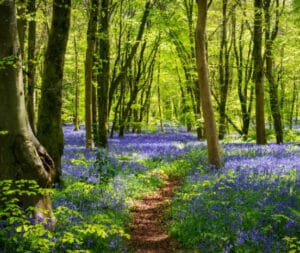
Nature can be both healing and supportive, but where it can be particularly important is when we search for closure.
Part of this is how nature helps to ground us in the present moment. Mindfulness often helps us to process difficult emotions such as grief, and with nature inflaming all of our senses, it can help to slow our minds and keep us focused on the here and now.
It is a space where all emotions are welcome. Nature never judges; instead, it inspires and accepts… and that can be incredibly comforting.
That release is not always necessarily overt; enjoying the great outdoors not only boosts our mood but helps us to process the emotions and thoughts that we can find difficult to address.
Nature also helps us to change our perspective on life. Nature is inherently cyclical, with death and rebirth intermingling and providing an eternal connection between past, present and future.
The natural world is incredibly resilient; even after the coldest and most barren winter, life grows again, and with the possibility for renewal, there is always hope.
People are the same; whilst loss is painful, it is also not the end. As we grow and transform, we carry the love, lessons and memories of those we have lost with us, allowing their legacy to shape the life that continues ahead.