Blog
Honouring Your Loved One’s Legacy
Among the many ways to honour the legacy of a loved one, celebration of life services and parkland burials offer a cheerful alternative to sombre funerals.


Among the many ways to honour the legacy of a loved one, celebration of life services and parkland burials offer a cheerful alternative to sombre funerals.

Losing a loved one is always difficult, and finding a meaningful way to honour their legacy is deeply important. Traditional funeral services and burials may not always meet every family’s needs.
This is especially true if they fail to properly reflect the character, lifestyle and values of a much-loved person whose life has had a positive impact on many.
If someone lived a life full of joy and colour, is a mournful occasion with sombre music and black ties the right way to mark their passing? Should it just be a day of tears and not of laughter?
This may be extended to the burial itself. Would laying them to rest in a traditional graveyard and putting up a headstone be a fitting way to say goodbye?
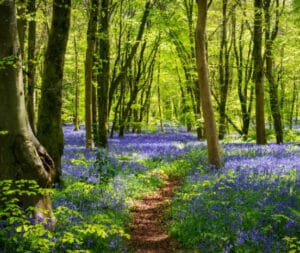
If you are not satisfied with the legacy that this would provide for your loved one, many others feel the same way. But what should you do instead? And could a non-traditional parkland burial amid trees and nature be a more fitting final resting place?
There are several matters you could consider when thinking of the best way to honour a loved one and their legacy:
In the first case, ‘celebration of life’ services have become increasingly popular in recent years. It is not hard to understand why.
These ceremonies replace sombre tones, tears and dressing in black with colour, music and laughter, with the focus on great memories and fun. It is less about a life ended than a life well lived with so much to celebrate.
Such services can be very informal and even irreverent, although our service halls do make allowance for different faiths, beliefs and practices, including those traditions that would be relevant to your loved one.
Among the services we provide are eco-friendly cremations, which may be particularly pertinent for anyone who felt strongly about protecting the natural world.
Natural settings offer a more personal approach to burial, where loved ones are laid to rest among greenery, nature, trees and flowers, rather than within the more formal layout of a traditional cemetery. Some might observe that this is not a new idea. Indeed, many people have had their ashes scattered in places they loved in life with no grave or memorial present.
Famous examples would include people like Alfred Wainwright, the writer of guides to the Lake District hills and mountains. His ashes were scattered on his favourite peak, Haystacks.
The most outlandish move was that of the astronomer Eugene Shoemaker, co-discoverer of a comet that famously struck Jupiter in 1994, who had his ashes sent by rocket to the moon.
However, for some people, especially in later life, even reaching a Lake District summit would be quite a challenge, let alone the moon. But for nature lovers and their families, the sites we offer provide the perfect balance between accessibility and verdant serenity.
Doing without a headstone may not be everyone’s choice, but there are many practical benefits to this.
As well as being cost-effective and requiring less maintenance, natural burials are also unobtrusive, making them suitable for those who want to feel at one with nature. They are also less likely to fall into disrepair over time, unlike many traditional graves.
Moreover, it means that in the future, when you visit the parkland where your loved one is buried, you don’t need to worry about maintaining headstones or memorials, as the surroundings remain naturally cared for.
Instead, it is all about a place, reflection and the beauty of nature.
In modern times, the artificial can often seem to supersede the organic world, but death is a natural part of life and all our science and technology does not change that. However, it can help to preserve memories.
With digital cameras and recording equipment being ubiquitous, it is easier to record more of a person in their lifetime, preserving pictures and speech more effectively than just a few dusty photo albums.
These means of maintaining memories might even be included in a celebration of life service. This can increase the focus further on the life and legacy of a loved one, and all the things to smile about because they were here.